The long-awaited era of rational materials design has transitioned from theory to reality.
This paradigm shift in chemical synthesis, known as reticular chemistry, was recently formalized on the global stage by the 2025 Nobel Prize in Chemistry, which recognized the foundational work of Richard Robson, Omar Yaghi, and Susumu Kitagawa in pioneering Metal-Organic Frameworks (MOFs). This revolutionary class of molecular architecture is, in the words of Laureate Omar Yaghi, the process of “stitching molecular building blocks together by strong bonds.”
“MOFs are particularly exciting because we can take everything that we know about molecules, and we can now build with three-dimensional solids. It’s amazing,” said UChicago Prof. John S. Anderson, associate chair of the Chemistry Department.
The core appeal of reticular chemistry is its unprecedented control. For a century, chemists relied on serendipity—discovering new materials through trial-and-error. Now, MOFs and related compounds, custom-built with atomic-level precision, are poised to replace the world’s reliance on a limited supply of standard materials. Currently, the ultimate goal—to deploy thousands of unique, custom-engineered MOFs—is the massive challenge actively being pursued by UChicago researchers driving the next generation of technologies for demanding environmental and energy challenges.
Guiding Discovery: Computational Intelligence and Global Impact
UChicago Pritzker School of Molecular Engineering (UChicago PME) and Chemistry Prof. Laura Gagliardi, a specialist in theoretical and computational modeling, leads UChicago’s MOFs research ecosystem. Her mission is unambiguous: to accelerate the discovery of materials for sustainable energy and environmental applications. This theoretical work has been practically amplified through her deep collaboration with Yaghi.
Gagliardi’s computational expertise and Yaghi's synthetic capability have formed a predictive partnership addressing urgent global challenges. For example, the Gagliardi group provided the mechanistic roadmap for optimizing the Atmospheric Water Harvesting (AWH) material MOF-303. This computational optimization led to a material that extracts 50% more water from air than previous versions. The team extended this predictive capability to Covalent Organic Frameworks (COFs), resulting in COF-999, an exceptional material for the direct air capture of carbon dioxide.
“Our collaboration shows how theory and experiment really feed into each other,” Gagliardi said. “Computation helps guide the design of new materials before they’re made in the lab, and once they are synthesized, experimental data helps us refine our models. It’s a true dialogue between atoms on the screen and atoms in the lab—something neither of us could achieve alone.”
This synergy is the engine of innovation, demonstrating how MOFs science connects “two worlds—the molecular and the material,” Gagliardi said. “It is a field that shows how chemistry can be both deeply fundamental and incredibly useful.”
The EFRC: A Collaborative Engine for MOF Catalyst Discovery
Driving this high-throughput discovery is the Catalyst Design for Decarbonization Center(CD4DC), a Department of Energy-funded Energy Frontier Research Center directed by Gagliardi. This powerful multidisciplinary effort, which includes Anderson, UChicago Chemistry Asst. Prof. Anna Wuttig, UChicago PME and Chemistry Prof. Andrew Ferguson, and other UChicago PME and Computer Science faculty, as well as numerous postdoctoral and graduate students, unites UChicago, Argonne National Laboratory, and collaborators nationwide. The center’s core mission is the accelerated discovery of new catalysts for the energy transition, using the MOFs platform.
The EFRC CD4DC has already achieved transformative results by coupling Artificial Intelligence with rapid, automated testing. A 2023 collaboration with Argonne National Laboratory used AI to screen thousands of candidates hidden inside a single MOF, successfully boosting the efficiency of a key industrial reaction from 0.4% to a remarkable 24.4%. This predictive approach dramatically slashes the time required to develop essential clean energy catalysts, shortening the timeline from concept to commercialization.
Gagliardi emphasizes that the center’s success hinges on its collaborative structure.
“We have chemists, physicists, materials scientists, and engineers all working together toward clean energy solutions,” she said.
Forging the Frontier: Electrocatalysis, Medicine, and Next-Gen Electronics
Though MOFs are naturally electrical insulators—a major barrier to their use in high-value applications like batteries and advanced computing—Anderson’s lab is directly focused on overcoming this challenge by synthesizing highly conductive frameworks. His lab designs materials with unique electronic and magnetic properties by strategically utilizing unconventional components to enhance electrical coupling within the framework.
For Anderson, reticular chemistry represents a new, limitless frontier. The unique architectural control MOFs present is critical for creating high-performance electrode materials, directly enabling technologies like faster-charging batteries. As the MOFs conductive, porous structure provides rapid ion channels necessary for speed, it contributes in part to a larger goal: the creation of a material that can be fabricated like plastic but conducts like metal.
Beyond conductivity, his lab has also pioneered research on magnetic MOFs for energy efficient oxygen separation. Because oxygen is magnetic, a porous magnet can selectively absorb it at room temperature, dramatically reducing the massive energy required by traditional cooling methods. This ability bypasses the massive energy demands of traditional cooling, offering industrial gas producers the potential to slash multi-million-dollar annual electricity bills while efficiently producing medical-grade oxygen.
The Spintronics Breakthrough
More recently, the lab has focused on combining the conductivity of these MOFs with magnetic properties to create MOFs for spintronics, a critical field for creating next-generation computer memory, where data is stored using magnetic fields. By synthesizing a single material that is both magnetic and conductive, the lab aims to create vastly more efficient memory and dramatically reduce the energy required for data storage.
“The material's flexibility makes us hopeful that it can be tuned for cutting-edge performance in the emerging field of spintronics,” Anderson said.
UChicago's MOF Frontier: From Interfaces to Nanomaterials
The Anderson lab’s work on creating novel conductive and magnetic materials represents just one facet of the MOF revolution at UChicago. The full potential of these frameworks is realized through the contributions of colleagues who extend their utility into diverse domains:
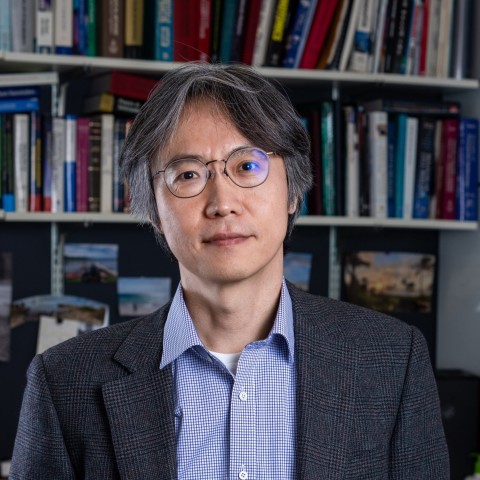
Prof. Jiwoong Park
Wafer-Scale Integration: Chemistry Department Chair and UChicago PME Prof. Jiwoong Park is applying the molecular precision of MOFs and COFs directly to semiconductor manufacturing. His team’s invention, Laminar Assembly Polymerization, is a general method to synthesize these materials as robust, monolayer-thick films across large industry-standard wafers —the circular semiconductor slices used as the base for integrated circuits. This breakthrough establishes MOFs as a viable, large-area platform, enabling the construction of functional hybrid superlattices by stacking the atomically thin frameworks with other 2D crystals. This methodology is paving the way for next-generation flexible circuits, advanced sensors, and integrated energy devices by perfecting the large-scale integration of the MOF/COF architecture itself.
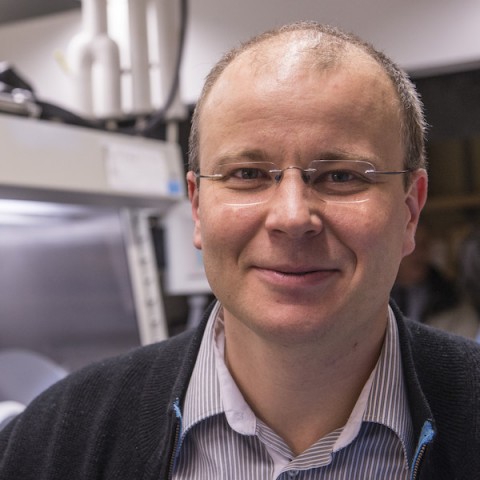
Prof. Dmitri V. Talapin
Foundational Methodology: While Park's work focuses on perfecting the large-scale platform, the creation of multi-functional MOFs is enabled by the foundational methodology provided by Chemistry Department and UChicago PME Professors Dmitri Talapin and Paul Alivisatos, who focus on preparing and tuning the functional, nanoscale building blocks before assembly into any framework. Talapin provides the essential chemical toolkit as an expert in synthesizing and controlling the surface chemistry of 2D inorganic crystals (like quantum dots and MXenes), directly enabling the creation of ultrathin, two-dimensional MOF nanosheets for advanced catalysis and energy conversion.
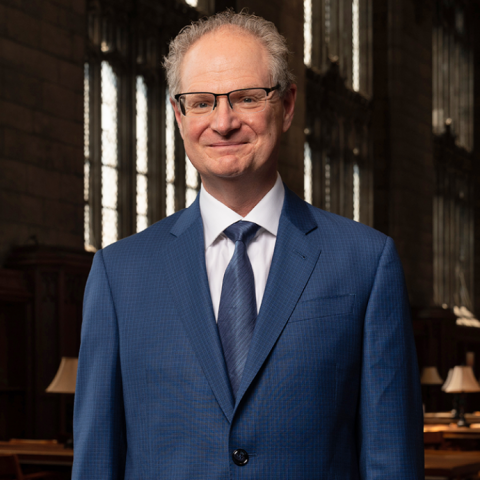
Prof. Paul Alivisatos
This is underpinned by the pioneering research of Alivisatos, who is also the University of Chicago president. Alivisatos’ seminal concept of treating colloidal inorganic nanocrystals like quantum dots as “artificial atoms” established the methods for synthesizing these precise components, which can be pre-programmed with functionalities—such as luminescence or advanced conductivity—before they are integrated into the MOF structure.
The UChicago researchers are actively realizing the ultimate vision for MOFs. Their work is establishing a customizable materials platform that will define a new generation of technology for health, energy, and global sustainability challenges.
“It's the real deal,” Anderson said. “And there’s more coming,”