Christopher G. Arges - Materials Seminar
To Measure Is to Know: Adventures in Measuring the Transport and Kinetic Properties of Ion-Exchange Membranes
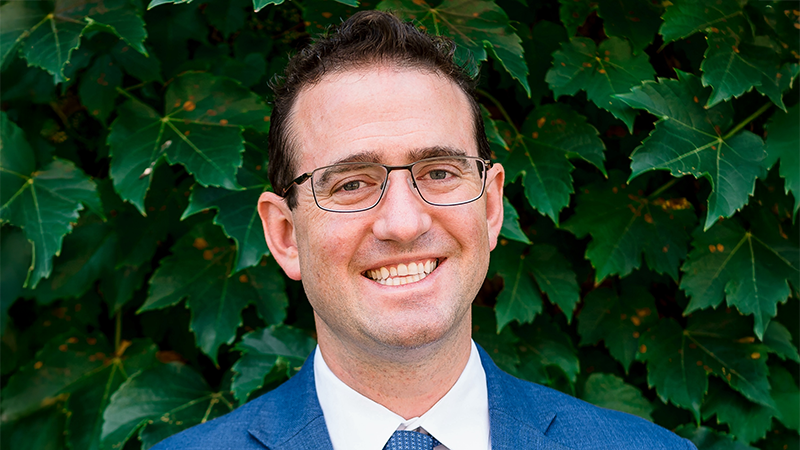
Christopher G. Arges
Principal Chemical Engineer, Applied Materials Division, Argonne National Laboratory
CASE Senior Scientist Affiliation, Pritzker School of Molecular Engineering, University of Chicago
Ion-exchange membranes are critical components of electrochemical technologies for energy conversion, chemical manufacturing, and separations. Their performance depends on transport properties, including ionic conductivity, permselectivity, and water permeability, as well as reaction kinetics in bipolar membranes. Accurately measuring these properties is challenging because experimental configurations, measurement protocols, and operating conditions strongly influence the observed responses. Reliable characterization is therefore essential for establishing meaningful structure–property relationships in ion-exchange membranes.
In this talk, I will share three research stories illustrating how rigorous measurements advance our understanding of membrane transport and kinetics. First, I will demonstrate how Luggin capillary placement influences measured ohmic losses at membrane-liquid interfaces and the reverse-bias polarization behavior of bipolar membranes. Second, I will discuss measurements of permselectivity and water permeability in anion-exchange membranes for CO₂ electrolyzers. Accounting for thermodynamic excess properties at membrane-liquid interfaces is essential for accurately determining permselectivity, while greater water permeance does not necessarily imply a higher water diffusion coefficient.
Finally, I will discuss proton conductivity measurements in phosphoric-acid-containing high-temperature polymer electrolyte membranes for fuel cells. Careful control of water vapor at temperatures above 120 °C is critical for mitigating polyphosphoric acid formation and obtaining reliable conductivity measurements. Together, these examples demonstrate how thoughtful experimental design reveals fundamental transport and kinetic processes and informs the development of new ion-exchange membranes materials.
Host: Professor Paul Nealey