
Hisham Mazal - Quantum Science and Engineering Seminar
On Cryogenic Fluorescence Microscopy and Label-Free Solution-Analysis of Single Proteins
Advances in optical microscopy are redefining the limits of spatial resolution and detection sensitivity, revealing biological structures and processes at the molecular scale. In this talk, Mazal will present two complementary approaches that harness light-matter interactions to probe biomolecules with unprecedented precision and sensitivity. First, Mazal will describe single-particle cryogenic light microscopy (spCryo-LM), a technique that combines fluorescence super-resolution imaging with vitrified sample preservation to resolve membrane protein conformations with Ångström-level precision. By operating at liquid-helium temperatures (4 K), this approach maintains near-native protein conformations while circumventing the resolution limits imposed by fluorophore photobleaching. Mazal will demonstrate its capabilities by resolving the blade-domain conformations of the mechanosensitive ion channel PIEZO1 within its native membrane environment. Second, Mazal will discuss recent advances in the label-free detection of small proteins using interferometric scattering microscopy (iSCAT). By addressing the technical and speckle-related noise sources that have traditionally limited sensitivity, Mazal’s group pushes single-molecule detection down to 10 kDa, well below the ~40 kDa threshold of conventional approaches, enabling mass photometry of proteins previously inaccessible to optical methods. Together, these two approaches illustrate how pushing light to its limits can be leveraged to achieve extreme precision and sensitivity in biological imaging, advancing our ability to visualize proteins, from their structural conformations to their fundamental biophysical properties, in their native state.
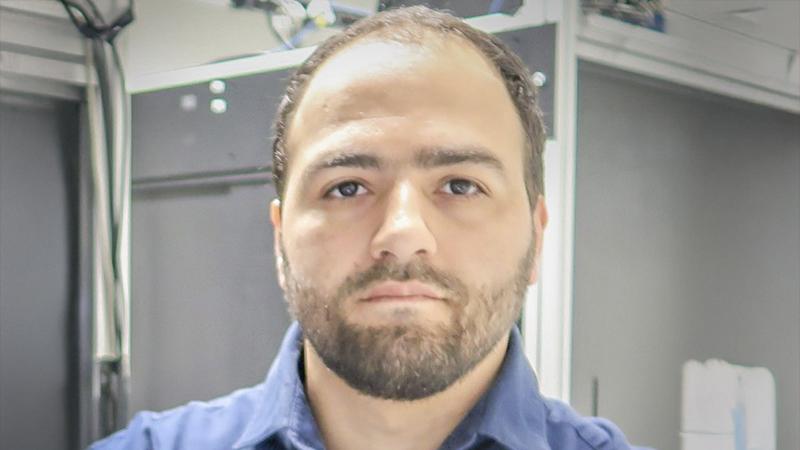
Born in a Palestinian village in the Galilee region of Israel, Hisham Mazal obtained his Bachelor's degree (BSc) in Biotechnology Engineering from ORT Braude College of Engineering (Israel) between 2009 and 2013, followed by a Master's degree (MSc) in Chemical and Biological Physics at the Weizmann Institute of Science (Israel) from 2013 to 2015. He then continued at the Weizmann Institute for his direct-track PhD from 2016 to 2019, with a thesis titled "Single-Molecule Protein Dynamics: From Ligand Binding Effects on Folding to Function-Related Motions," under the supervision of Prof. Gilad Haran. In June 2020, he joined the group of Prof. Vahid Sandoghdar at the Max Planck Institute for the Science of Light (Germany) as a postdoctoral fellow, where he has been developing cryogenic super-resolution microscopy and spectroscopy for biological applications, as well as contributing to highly sensitive protein detection using interferometric light scattering.