
Battery pioneer Shirley Meng receives ISSI Mid-Career Researcher Award
Biennial award honors innovation and leadership in the field of solid state ionics
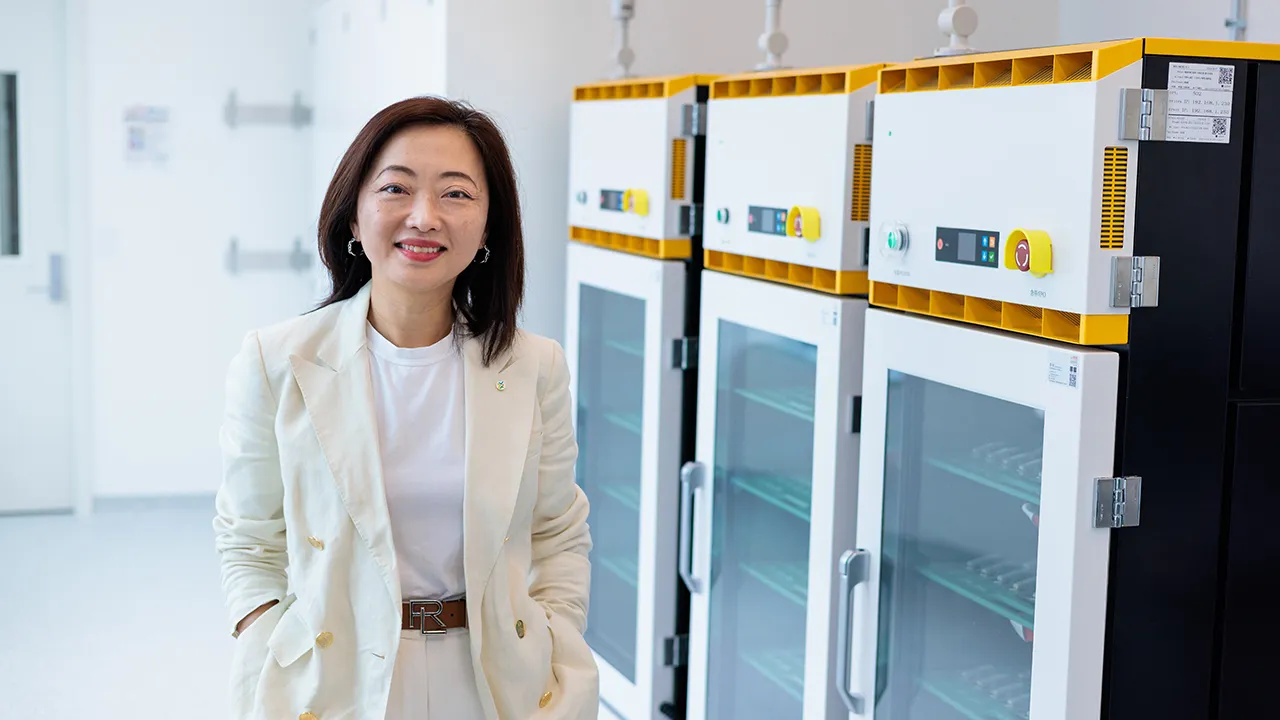
UChicago Pritzker School of Molecular Engineering (UChicago PME) Liew Family Professor Shirley Meng has received one of the top honors in the field of solid state ionics. Given every two years, the International Society for Solid State Ionics (ISSI) Mid-Career Researcher Award recognizes exceptional leadership and innovation in the field.
For her work advancing this field, Meng received the award on July 10 at the SSI-25 conference in Singapore as a joint honor with Prof. Naoaki Yabuuchi from Yokohama National University.
“It is a special honor to be recognized as a mid-career researcher because battery research itself is at a middle point," said Meng. “There has been both an exceptional amount of work done in the past and a great amount of work ahead as we continue to meet the world’s energy challenges.”
Solid state ionics, the study of how charged atoms move through solids, can be seen in next-generation batteries as well as in new methods to extract polluting chemicals from water and even advances in memory storage and healthcare.
I want to make sure scientific breakthroughs don’t stay in the lab but are out creating positive impact in real-world products and devices.
UChicago Pritzker School of Molecular Engineering Liew Family Professor Shirley Meng
Meng, who serves as Distinguished University Professor and Vice President (Industry) at Nanyang Technological University, Singapore (NTU Singapore) and holds a joint appointment at UChicago PME, is a global innovator in sodium-based batteries. At NTU, she leads the University’s efforts in forging partnerships with leading global companies and institutions, and in establishing joint research institutes worldwide.
Many modern batteries powering EVs and electronics and keeping renewable energy on the grid are based on lithium. Meng’s research focuses on materials such as sodium and sulfur – less expensive, more abundant and less environmentally damaging to harvest than lithium.
“Tomorrow’s energy storage needs require a vast array of battery materials, each filling various functions,” Meng said. “No one material is suitable for all uses. We need every tool at our disposal to help transition the planet off fossil fuels.”
Repeatedly named one of the world’s most-cited researchers by Clarivate, Meng's work advances both industry applications and pure science, finding thermodynamics-defying metastable materials, uncovering gaps in technique hindering research, learning how and why batteries fail and creating new battery architectures.
As co-director of the University of Chicago’s Energy Transition Network, Meng helps build powerful connections between academia and industry.
“I want to make sure scientific breakthroughs don’t stay in the lab but are out creating positive impact in real-world products and devices,” she said.
Meng received her PhD in Advanced Materials for Micro & Nano Systems from the Singapore-MIT Alliance in 2005, and her bachelor’s degree with first-class honors from NTU Singapore in 2000. She was the Zable Endowed Chair Professor in Energy Technologies at the University of California-San Diego (UCSD) before joining UChicago PME and then NTU Singapore.
Related News
-
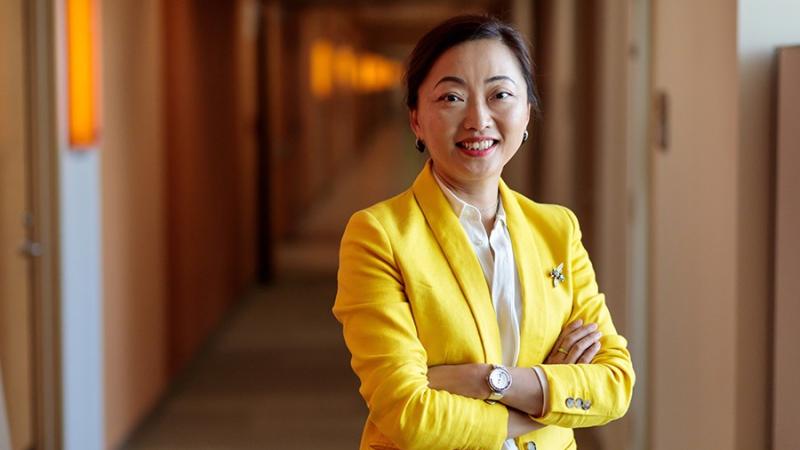
UChicago Prof. Shirley Meng’s Laboratory for Energy Storage and Conversion creates world’s first anode-free sodium solid-state battery – a breakthrough in inexpensive, clean, fast-charging batteries
July 03, 2024UChicago Pritzker Molecular Engineering Prof. Y. Shirley Meng’s Laboratory for Energy Storage and Conversion has created the world’s first anode-free sodium solid-state battery. With this research... -
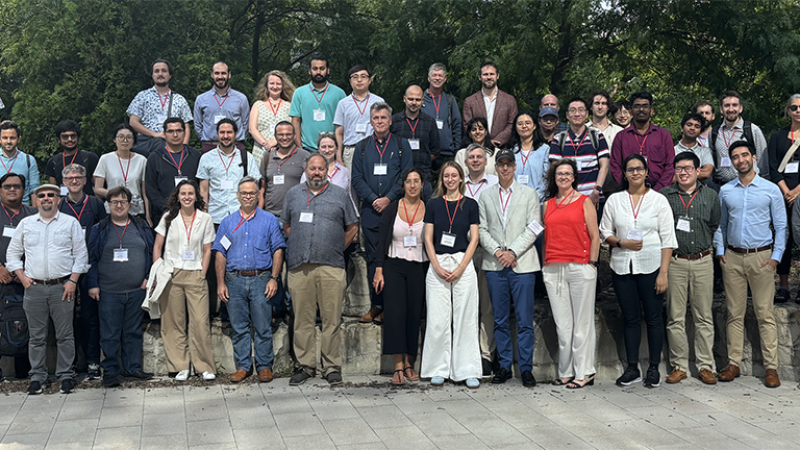
Using computational modeling to tackle science’s biggest questions
July 19, 2024Experts from around the globe gathered at the University of Chicago this week to push the boundaries on using artificial intelligence, machine learning, and other computer modeling innovations to... -
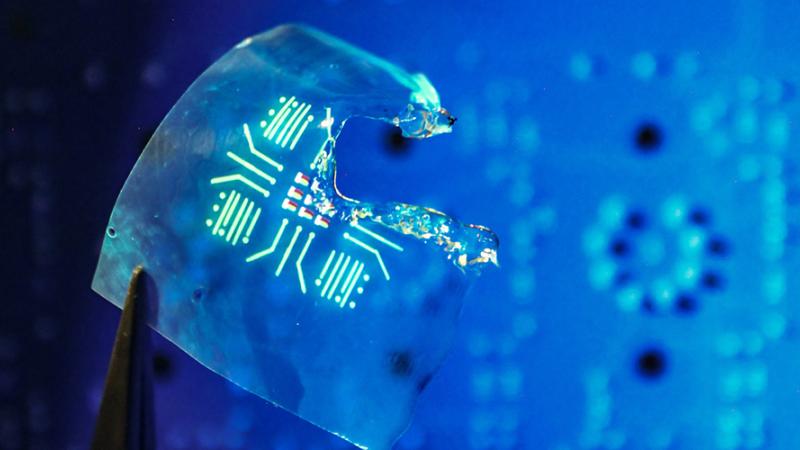
Reducing electronic waste with biodegradable luminescent polymers
July 22, 2024From your car’s navigation display to the screen you are reading this on, luminescent polymers — a class of flexible materials that contain light-emitting molecules — are used in a variety of today’s...