Convocation 2026: Getting ready to change the world
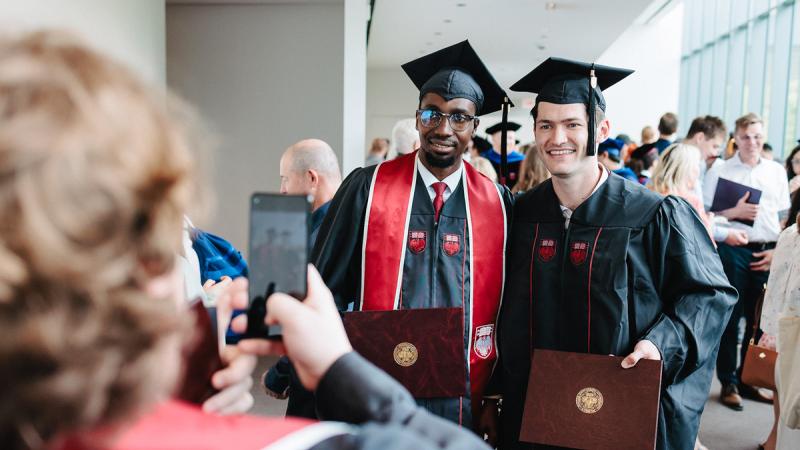
The UChicago Pritzker School of Molecular Engineering will celebrate 40 PhD students, 28 Master of Engineering students, 67 Master of Science students and 52 undergraduate Molecular Engineering majors as part of the class of 2026 at the University of Chicago’s 540th Convocation on Saturday, June 6.
The event, held in the University of Chicago’s David Rubenstein Forum, will feature illustrious educator, physicist, and executive Dr. Walter E. Massey as keynote speaker.
Meet three of the soon-to-be graduates poised to change the world:
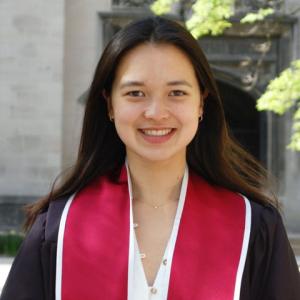
UChicago PME undergraduate Molecular Engineering major Ingrid Appen knows her long-term goal – a faculty position at a top-tier university.
“I would love to come back to UChicago PME as a professor one day,” she said.
After Convocation, she will be spending one year as a Fulbright English Teaching Assistant in Taiwan before starting a Chemical Engineering PhD at UC Santa Barbara. She hopes to study sustainable polymers, the subject of her work as an undergraduate researcher in Prof. Stuart Rowan’s lab, but is open to wherever her UChicago PME education takes her.
“I learned more here than I ever have, both about engineering and about working hard, getting through failures, and relying on friends and professors,” she said. “I am so grateful to this program and highly recommend applying. For first-year Molecular Engineering majors, my top pieces of advice are: go to office hours, study with friends, and try research.”
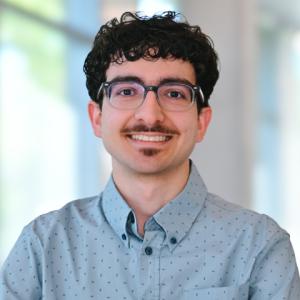
Master of Engineering (MEng) student Amirhossein Moghtader said he expected to be challenged in the classroom when he enrolled at UChicago PME on the Bio- and Immunoengineering track. What he didn’t expect was how life-changing the experience outside the classroom would be as well.
“The UChicago PME community ended up being one of the most unexpected and rewarding parts of the experience,” he said. “From supportive advisors to peers from different backgrounds who challenged how I think, some of my best memories came from outside the classroom: trivia nights, soccer games, exploring the city together and getting to know the people I now consider close friends.”
Moghtader said the MEng program isn't just focused on creating top-tier scientists, but well-rounded STEM professionals ready to take on any challenge.
“The curriculum is flexible to your interests and goes by faster than you expect,” he said. “Take advantage of the broader UChicago ecosystem, such as the research labs, Booth School of Business courses and the career resources. And most importantly, connect and meet the people around you, as the interdisciplinary community here is one of the program’s greatest assets.”

PhD candidate Connor Horn is already in his next role. As co-founder and CEO of K1 Semiconductor, he is bringing a technology developed in Prof. Supratik Guha’s lab to the real world, hoping to revolutionize semiconductor manufacturing.
“We are using a semiconductor wafer splitting technology to upend the traditional wasteful and restrictive processes for semiconductor device manufacturing,” he said.
K1, which Horn co-founded with Guha, fellow UChicago PME PhD students Xella Doi and Sagar Kumar Seth and UChicago Booth School of Business student Joe McDonald, is already turning heads in the startup world. It has received a slate of recognitions, including taking second place at the Polsky New Venture Challenge and joining the Chicago Quantum Exchange and the inaugural cohort of the Alchemist Chicago Accelerator.
Horn and Doi were also named to Forbes’ celebrated 30 Under 30 list in the Manufacturing & Industry category, two of the seven UChicago PME-affiliated young researchers to be honored in the 2026 list.
Horn said UChicago PME’s interdisciplinary lens and focus on solving the world’s most challenging problems made his time here “rewarding and fun due to the freedom to develop and pursue many new ideas.”
“The scientific directions pursued by UChicago PME researchers are uniquely shaped by a collaborative approach to tackling real-world grand challenges,” Horn said. “My PhD work began as a very pie-in-the-sky idea that did not fit neatly within the silo of a traditional department. With the support of UChicago PME, I was able to pursue this unusual project which ultimately led to very exciting results.”