Harnessing AI to find new materials
PhD student Rodrigo Pires Ferreira uses his talents for problem solving to discover new materials for future technologies

PhD student Rodrigo Pires Ferreira uses AI and machine learning to determine the best materials for chemical sensors.
Whether he’s solving crosswords, playing poker, or conducting scientific research, Rodrigo Pires Ferreira is a problem solver at heart.
“It almost doesn’t even matter which subject,” he said. “I have just always liked the framework of taking a complex problem and modeling it to see what happens.”
He took that love to his undergraduate studies in aerospace engineering in Sao Paulo, Brazil. But after completing a master’s degree in physics, he wanted to pivot to apply what he had learned to solve problems across disciplines.
That’s how he found the graduate program at the University of Chicago Pritzker School of Molecular Engineering (UChicago PME).
“It has this interdisciplinary vibe, with people from different backgrounds connecting across research areas,” he said. “And the school itself was growing, so it was really exciting to feel like you’re on a rocket ship, taking off.”
At UChicago PME, Pires Ferreira is part of Prof. Junhong Chen’s group, where he uses AI and machine learning to determine the best materials for chemical sensors. He’s also developing algorithms to process the signals from those sensors.
“We want to know the optimal combination of materials that will give us the best tool to detect a wide range of chemical targets,” he said.
Because the Chen lab is mostly experimental, Pires Ferreira is co-advised by statistics Asst. Prof. Claire Donnat, who helps him and the lab “build up our AI and machine learning muscle.”
“Professor Chen has been supportive and gives me a lot of academic freedom, which I love,” he said. “He’s always happy to connect me to resources or people who can help me.”
UChicago PME is great for pushing AI for science. I’ve learned how to apply the right AI tools to the right problems. If you’re committed to having a real impact, this is the place to be.
PhD student Rodrigo Pires Ferreira
Pires Ferreira’s work on developing an algorithm to find a material to sense per- and polyfluoroalkyl substances (PFAS)—“forever chemicals” that are widespread in the environment—was published in 2025.
“UChicago PME is great for pushing AI for science,” he said. “I’ve learned how to apply the right AI tools to the right problems. If you’re committed to having a real impact, this is the place to be.”
Knowing the right problems to solve is part of the campus culture, where students from across disciplines often get together to talk about their research. “When you’re here, you work with people from computer science, chemistry, physics, and materials to actually build tools for the world,” he said.
Outside of the lab, Pires Ferreira loves to go for a run or take in a performance at the Chicago Symphony Orchestra. And he still makes time to solve crosswords and play poker with friends.
After his PhD, Pires Ferreira hopes to continue to work in AI for materials discovery, though he’s not yet sure whether his trajectory will lead to academia or industry. “We’re in the early days for AI for science, and there are still a lot of great opportunities ahead to answer the right questions,” he said. “I want to be a part of that movement. I’m not sure how, but I want to build at least a small block of this whole building.”
Related News
-

Polymer insights, biological impact
October 21, 2026Research sheds light on liquid-liquid phase separation, a process that helps cells form life-sustaining structures. -
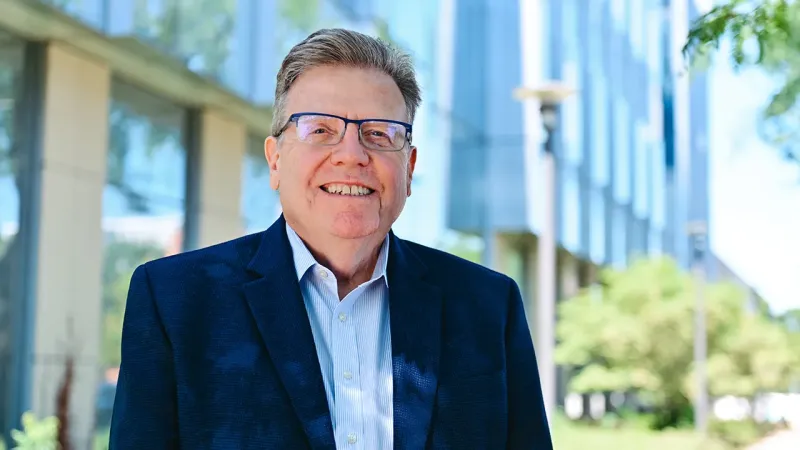
Matthew Tirrell elected to the National Academy of Medicine
October 19, 2026Tirrell has been elected to the National Academy of Medicine for pioneering the design and synthesis of self-assembling polymers to deliver peptide, protein, and nucleotide drugs in cardiovascular... -
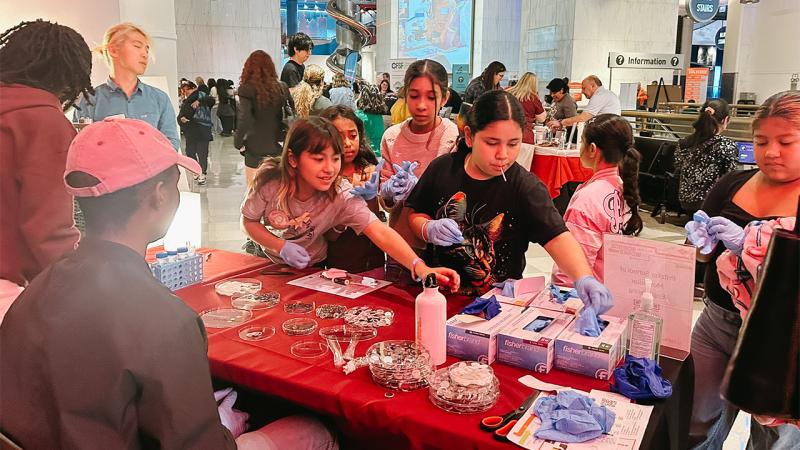
Battery Day lights up the Museum of Science and Industry
October 15, 2026Yearly event has Amanchukwu Lab researchers help children build and understand the batteries that power their lives.