
Peter B. Littlewood, condensed matter physicist and internationally recognized leader, 1955–2026
Remembered for expansive expertise, collaborative spirit, and dynamic leadership
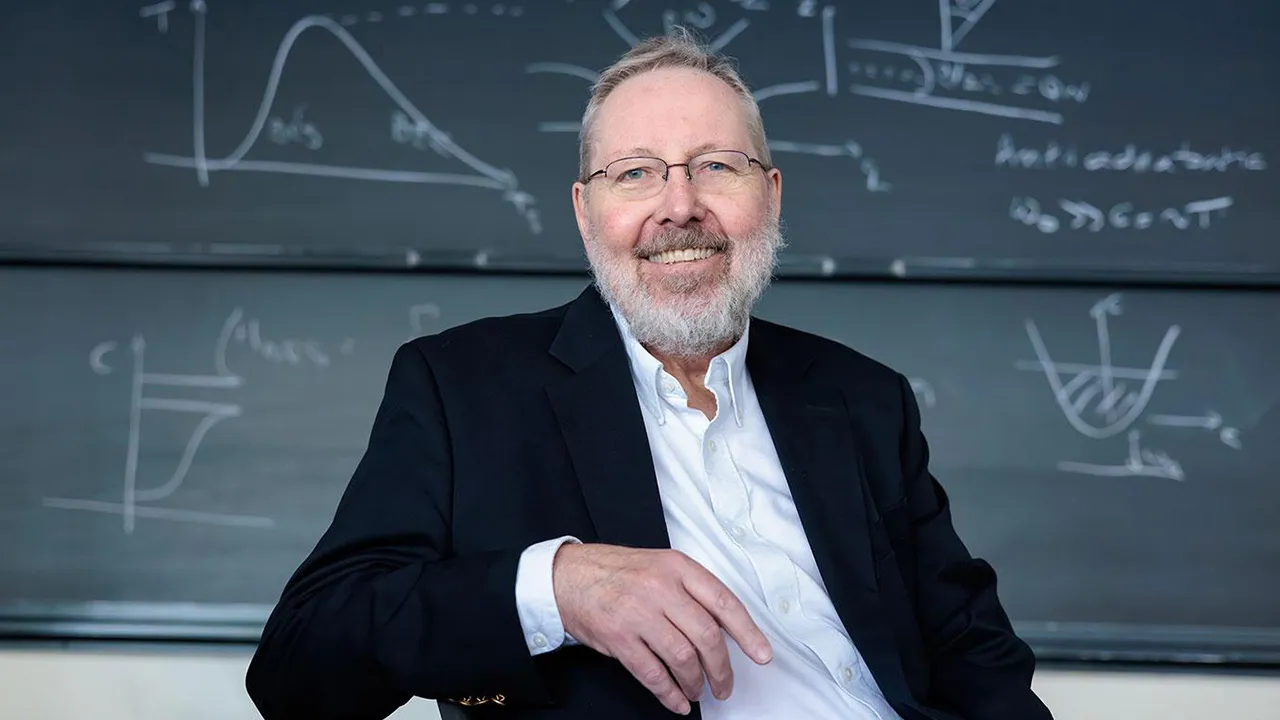
Peter B. Littlewood, a distinguished condensed matter physicist and internationally recognized leader of research institutions, died June 15. Littlewood, the chair of the Department of Physics at the University of Chicago and the Harry Pratt Judson Distinguished Service Professor in Physics and the James Franck Institute, was 71.
Littlewood’s research shed new light on the quantum behavior of superconductors, superfluids, semiconductors, and other collective phenomena; he also made contributions to optics, biophysics, and neuroscience.
But while he was a theoretical physicist by trade, Littlewood was highly interested in translating scientific discoveries into the real world and worked to do so—first at the famed Bell Laboratories, later as head of the Cavendish Laboratory and Argonne National Laboratory, and through multiple collaborations across disciplines throughout his career.
“Peter was a visionary scientist citizen, always looking to advance ambitious work,” said UChicago President Paul Alivisatos. “I got to know him first when he was director of Argonne as he championed the study of the brain and neurosciences with the advanced imaging and computational tools of the lab. In the years since, he relentlessly challenged us to look further, doing so with humor and high expectation.”
“Peter’s scientific depth was matched only by his extraordinary generosity and vibrant wit,” said longtime colleague Young-Kee Kim, the Albert A. Michelson Distinguished Service Professor in Physics and the Enrico Fermi Institute. “Known internationally for his transformative work on collective phenomena in condensed matter physics, his approach to science was deeply collaborative, always seeking to connect complex physics to real-world advancements. Over the years, his unwavering support—of me personally, as well as his profound commitment to our department, our students, and the community—left an unshakeable foundation.”
“Physics is what physicists do”
Born in 1955, Littlewood described growing up on a small farm near Shoreham in southeast England as an only child: “I spent most of my young life plowing, and it gives you a lot of time to think,” he said, and somewhere along the way he decided he wanted to become a scientist—and to go to Cambridge to do it. “I don't know why I even thought that because none of my family had ever been to university, but it turns out that if you just want to do things, sometimes they happen,” he said.
He earned a BA in natural sciences (physics) from the University of Cambridge in 1976. Littlewood spent a year at MIT as a Kennedy Scholar before returning to Cambridge to complete his PhD in physics in 1980, under the supervision of Volker Heine. After a two-year postdoctoral fellowship at Bell Laboratories in New Jersey, he joined their technical staff and became head of their theoretical physics research group in 1992.
Littlewood described Bell Labs as a formative institution for science—an industrial lab that was conducting fundamental research. There he applied his physics knowledge toward theoretical engineering, working on projects including holographic data storage, the theory of optical fiber capacity, and the development of acousto-optic switches.
He returned to the University of Cambridge in 1997 as the director of the Theory of Condensed Matter group and later became head of the Cavendish Laboratory and Department of Physics.
Littlewood’s research included superconductivity and superfluids, strongly correlated electronic materials, collective dynamics of glasses, density waves in solids, and applications of materials for energy and sustainability.
With his growing interest in energy research, Littlewood moved to the Chicago area, joining Argonne National Laboratory in 2011 as Associate Laboratory Director for Physical Sciences and Engineering and the University of Chicago as a part-time faculty member. He was a key contributor to the Institute for Molecular Engineering (now the Pritzker School of Molecular Engineering), which was established that year in partnership with Argonne to address some of the world’s most challenging problems.
Peter was a brilliant scientist whose impact extended far beyond his research and leadership.
Argonne Laboratory Director Paul Kearns
Littlewood went on to serve as Argonne’s Director from 2014 to 2016. During this time, he helped lead landmark projects in fields such as energy storage and high-performance computing. He also guided a multi-year lab modernization plan, bringing state-of-the-art research facilities to the Argonne campus. In addition, Littlewood strengthened collaboration between Argonne and UChicago, and he was instrumental in advancing the region’s innovation ecosystem.
“Peter was a brilliant scientist whose impact extended far beyond his research and leadership,” Argonne Laboratory Director Paul Kearns said. “He was deeply respected, admired, and beloved by colleagues across Argonne and the broader scientific community. I was fortunate to work closely with him and will always remember his curiosity, warmth, and commitment to helping others succeed. His legacy lives on in the laboratory he helped shape and in the many people he inspired.”
In 2017, Littlewood returned to UChicago as a full-time faculty member. In recent years, his research activities included the dynamics of non-equilibrium and driven systems, particularly those that exhibit transitions between different types of synchronization. This included quantum systems, such as lasers and light-matter condensates, as well as classical active matter such as flocks, and artificial neuronal systems.
“Peter was striking in the breadth of his knowledge and enthusiasm for all areas of physics, as well as its extensions to diverse areas of science and technology. His expertise was in condensed matter physics, the physics of collective phenomena—what are the emergent properties of systems with large numbers of components that underlie diverse behaviors—from magnetism to neural computation,” said colleague and collaborator Margaret Gardel, the Edward L. Ryerson Distinguished Service Professor in Physics, Molecular Genetics and Cell Biology, and PME, and director of the James Franck Institute and the Center for Living Systems.
“His style is one I attribute to the ‘Bell Labs’ model, where finding connections between disparate systems can lead to disruptive advances in understanding. For Peter, this meant working on problems in strongly driven quantum systems and neuronal signaling,” Gardel added. “His enthusiasm for finding these connections was infectious.”
Also a fellow of the Pritzker School of Molecular Engineering and a member of the Center for Living Systems and the Neuroscience Institute, Littlewood defied categorization of his field. He believed that “physics is what physicists do.”
A uniting force
Littlewood had a reputation for inspiring people to collaborate in powerful and productive ways: “Peter was a very generous soul with a gift for bringing people, especially younger researchers, together to work on interdisciplinary projects,” said colleague and collaborator Vincenzo Vitelli, Professor in Physics and the James Franck Institute, and Scientific Director of the CNRS-UC International Research Center. “I cherish the work we did together on nonreciprocal systems as the most precious moment of my career, both scientifically and personally. In typical Peter style, it brings together ideas from quantum mechanics and neuroscience.”
“Peter was a hero in my field when I was a graduate student; when I joined the Physics faculty at UChicago, I was still a little intimidated by him. His warmth and dry humor melted that, and we became close colleagues and friends,” said Stephanie Palmer, Professor in Physics, Organismal Biology and Anatomy, and the Neuroscience Institute. “From number theory to native plants, he took delight in life in all its forms. It was an honor to hood his most recent PhD graduate on June 6, Cheyne Weis, and share the photos with him, with just the right ‘Peter-esque’ mix of bemusement and joy.”
Peter was a very generous soul with a gift for bringing people, especially younger researchers, together to work on interdisciplinary projects.
Vincenzo Vitelli, Professor in Physics and JFI, and Scientific Director of the CNRS-UC International Research Center
In addition to his research and leadership positions, Littlewood served on advisory boards of several institutes, including the Simons Foundation, the Flatiron Institute, the Paul Scherer Institute, the Carnegie Institute for Science, the Max Planck Institutes at Halle and Hamburg, the London Centre for Nanotechnology, and the U.K.’s Faraday Institution, of which he was a founding executive chair. He became a visiting professor at University of St Andrews in 2022.
Littlewood wrote or co-authored over 270 publications and held seven patents. He was a fellow of the Royal Society of London, the National Academy of Sciences, the American Academy of Arts and Sciences, the Institute of Physics, the American Physical Society, and the World Academy of Sciences.
In October of 2025, Littlewood was awarded the Institute of Physics Gold Medal - Richard Glazebrook Medal and Prize in recognition for his exceptional leadership throughout his career.
“To lead and build research organizations is a privilege,” said Littlewood. “It’s a special joy to create institutional and societal impact.”
In addition to his scholarly accomplishments, Littlewood was a skilled pianist. He was passionate about classical music and spent much of his free time attending concerts and opera, as well as enjoying Chicago’s theater and art. He was also a keen traveler and loved attending conferences abroad and taking road trips.
Littlewood is survived by his wife Elizabeth and his children Chris and Sophie.
—Adapted from an article published by the Physical Sciences Division.
Related News
-
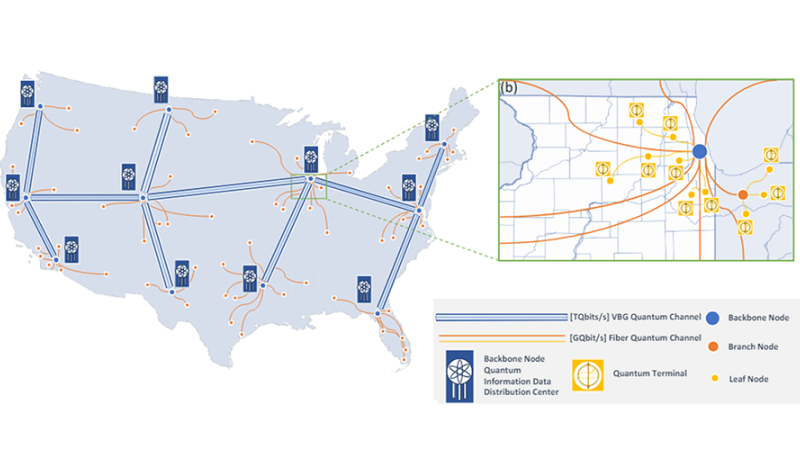
New method could yield fast, cross-country quantum network
July 09, 2024Quantum computers offer powerful ways to improve cybersecurity, communications, and data processing, among other fields. To realize these full benefits, however, multiple quantum computers need to be... -
Innovative phonon-based quantum computing research at UChicago Engineering gets a $3 million boost by the U.S. Department of Defense
July 15, 2024UChicago Pritzker School of Molecular Engineering Prof. Andrew Cleland has been named a 2024 Vannevar Bush Faculty Fellow, the U.S. Department of Defense’s flagship single-investigator award for basic... -

US Defense Department, State of Illinois announce multimillion-dollar quantum testing program
July 16, 2024The US Department of Defense will invest up to $140 million to develop a national proving ground for quantum technologies in the Chicago region, Illinois Governor JB Pritzker announced Tuesday morning...