
Welcome to the Neighborhood: UChicago Pritzker Molecular Engineering in focus as ACS Fall 2026 brings the world to Chicago
As the global research community gathers in Chicago for the American Chemical Society’s yearly conference, UChicago PME faculty and leadership share insights and innovations

Every year, University of Chicago Pritzker School of Molecular Engineering faculty, students and postdoctoral researchers join peers from across the globe to share their research, insights, innovations and world-changing impact at the American Chemical Society’s fall meeting.
This year, they’ll be able to share an additional message: Welcome to the neighborhood.
ACS Fall 2026 is being held in Chicago this year from Aug. 23-27, bringing nearly 11,000 scientists and innovators to share their work in the City That Works.
“Chicago has always been a hub of scientific thought leadership, with world-class universities, national laboratories, a strong industrial base and a thriving startup community,” said interim Dean Stuart Rowan. “UChicago PME researchers have come from across the world to be part of this community. We are thrilled to show off what we’re building here in Chicago.”
Although ACS is often considered a gathering of chemists, the interdisciplinary nature of UChicago PME means faculty representing all the school’s major research institutes – the Institute for Materials and Sustainability, the Immunoengineering and Bioengineering Institute and the Chicago Quantum Institute will all present their work at the four-day event.
“Our research and investments are helping build a quantum technology and jobs hub. We’re recycling and purifying the waters of the Great Lakes. We’re bringing life-saving healthcare breakthroughs to South Side hospitals and clinics,” Rowan said. “Our research – and impact – cross the region and the planet.”
Here are some of the insights UChicago PME faculty will share:
UChicago PME presentation highlights (alphabetical by last name)
Modulating reactive carbon capture through nonaqueous electrolyte design and interfacial control

Chibueze Amanchukwu, Neubauer Family Assistant Professor of Molecular Engineering
Electrocatalytic carbon dioxide (CO2) and CO conversion is vital because it provides a pathway to efficiently valorize CO2 and incentivize CO2 capture. Furthermore, it can be done at ambient temperature and pressure. However, these reactions are typically performed under aqueous conditions which suffers from the undesired hydrogen evolution reaction (HER) from water breakdown. For integrated CO2 capture and conversion (termed ‘reactive carbon capture’), carbon speciation is especially highly dependent on the media. Aprotic nonaqueous electrolytes can suppress HER and can modulate the carbon speciation especially when amines are used as the capture media. Furthermore, aprotic solvents can support higher concentrations of CO2. Here, we study the influence of aprotic electrolyte solvent on modulating the CO2-amine speciation, water microenvironment, ion solvation, catalyst degradation, and interfacial solvation for reactive CO2 capture. Our work is at the forefront of understanding how nonaqueous media affect water, CO2, and amine speciation and developing insights on modulating the interface and enabling active, selective, and stable electrocatalytic reactions.
Enabling a circular water economy through real-time water quality sensors
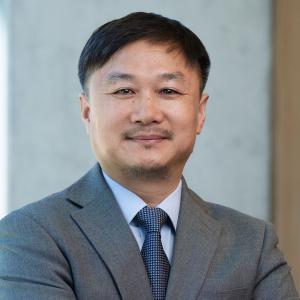
Junhong Chen, Crown Family Professor of Molecular Engineering, Lead Water Strategist at Argonne National Laboratory
Growing freshwater demand is intensifying global water stress while highlighting the tight coupling of water and energy systems. In the United States, municipal wastewater treatment consumes ~3% of national electricity, yet only ~10% of treated water is intentionally reused. Achieving a circular water economy requires continuous, reliable water quality monitoring to enable safe water reuse and resource recovery (e.g., critical minerals and nutrients). This presentation highlights low-cost, real-time water quality sensors based on molecularly engineered 2D nanomaterials integrated into field-effect transistor (FET) platforms. These sensors detect water contaminants through conductivity changes upon analyte binding, enabling sensitive, selective detection of PFAS, heavy metals, bacteria, and nutrients. Promising for continuous, in-line monitoring, the FET sensing platform supports rapid decision-making for water reuse, resource recovery, and infrastructure management, advancing resilient and energy-efficient water systems.
Chiral energy transfer dynamics

Greg Engel, Professor of Molecular Engineering, Co-Director of the Berggren Center for Quantum Biology and Medicine
Chirality is typically taught as the handedness of chemical structures, but dynamics can also be chiral. Here, I present evidence from multidimensional electronic spectroscopy for chiral dynamics wherein the difference in rates appears substantially larger than we would predict.
The talk will cover novel nonlinear spectroscopy to reveal chiral dynamics, the chemical bases for the dynamics, and substantial remaining questions for both theory and experiment regarding the microscopic origin of the observed effects.

Andrew Ferguson, Professor of Molecular Engineering, Vice Dean for Education and Outreach
Per- and polyfluoroalkyl substances are persistent environmental contaminants that demand highly sensitive and selective molecular recognition strategies for field-deployable detection. Cyclodextrin-based field-effect transistor sensors demonstrate high sensitivity to perfluorooctanesulfonic acid (PFOS), achieving sub-ppt detection limits, yet exhibit limited selectivity in the presence of structurally similar surfactants such as sodium dodecyl sulfate (SDS). By integrating molecular docking, all-atom molecular dynamics free energy calculations, and Bayesian optimization, we computationally evaluated the competitive binding thermodynamics of a synthetic library of 1,629 functionalized α-, β-, and γ-cyclodextrins to identify highly sensitive PFOS probes with predicted dissociation constants as low as KdPFOS = 2.8 × 10⁻¹¹ M and highly selective probes with PFOS selectivity over SDS of up to KdSDS/KdPFOS = 1.5 × 10⁵. Amine-functionalized cyclodextrins yield the highest discrimination ratios by selectively suppressing SDS binding, while fluorinated groups further enhance PFOS selectivity through favorable host-guest interactions. These results establish quantitative structure-selectivity relationships for cyclodextrin-based PFOS probes and realize a predicted 6000-fold improvement in sensitivity and 1000-fold improvement in selectivity over unfunctionalized β-cyclodextrin probes for next-generation PFAS molecular sensors.

Laura Gagliardi, Richard and Kathy Leventhal Professor, Department of Chemistry, UChicago PME, and the James Franck Institute; Director of the Catalyst Design for Decarbonization Center
Theory, computation, and machine intelligence, working in synergy with experiment, are accelerating the discovery of metal–organic frameworks and covalent organic frameworks for a wide range of applications. I will present our latest advances in the prediction of reticular framework materials for carbon dioxide and methane adsorption, with an emphasis on how modeling elucidates the structure–property relationships that govern adsorption capacity and selectivity. I will then discuss recent progress toward a computational and data-driven workflow designed to accelerate the discovery, synthesis, and optimization of complex catalytic architectures for natural gas conversion.
Multireference methods and foundational models for chemistry and materials
Laura Gagliardi
Multireference electronic structure methods are essential for accurately describing systems with strong multiconfigurational character, but their high computational cost limits practical applications. In this lecture I will discuss how we extended their applicability to the modeling of reactive dynamics, by developing machine learning potentials (MLPs) trained on multireference electronic structure data. A major challenge in this context is the sensitivity of multireference results to the choice of active space across varying molecular geometries. We addressed this issue through the introduction of the weighted active space protocol (WASP), a systematic approach for assigning consistent active spaces across ensembles of nuclear configurations. This approach was demonstrated on TiC+-catalyzed methane C–H activation, a reaction that poses significant challenges for conventional density functional theory due to its strong multireference character. I will also present some recent efforts on a deep learning model, the Cartesian Equivariant Orbital Network (CEONET), that improves how molecular orbitals are represented and analyzed in machine learning frameworks.

Giulia Galli, Liew Family Professor of Molecular Engineering
I will describe how to accelerate the electronic structure calculations of spin-defects— based on many-body perturbation theory and quantum defect embedding theory— to obtain their absorption and photoluminescence spectra, of interest to predict their optical cycle. I will also describe simulations of the spin dynamics of spin defects, and how to accelerate the prediction of coherence times using data-driven techniques.
Behind the scenes: Stories of atoms forming next generation materials
Giulia Galli
examples are silicon used in transistors and metal oxides in batteries, devices that have become omnipresent in our daily lives. In this talk we explore how the fundamental understanding of the way atoms interact in materials and molecules leads to predicting forms of matter that enable next generation technologies. We combine quantum mechanical theories, high performance computations and, through close collaborations with experiments, we design integrated, predictive strategies for materials design. I will touch upon several challenging problems: the discovery of radically novel systems for quantum technologies, specifically for quantum sensing and communications and of materials for low-power electronics and sustainable AI computing.
Interface control of photoanodes in photoelectrochemical cells
Giulia Galli
Understanding the processes of electron and hole transfer from electrode to water in a photochemical cell and controlling how to collect the charges required for chemical reactions at electrode/water interfaces remain outstanding problems in electrochemistry. Here we address these problems for a specific photoelectrode (BiVO4) in contact with water and protective layers, using Density Functional Theory calculations and the first-principles molecular dynamics (FPMD), augmented by machine learned potential with Deep-MD.
Our work builds on a body of results obtained in collaboration with the experimental groups of Kyoung-Shin Choi and Mingzhao Liu, where we have established the influence of the structural properties (surface termination, morphology, excess charges and presence of defects) on the electronic properties of the interface of BiVO4 with water and a catalyst.
One of the problems faced by BiVO4 photoelectrodes is their chemical instability in strongly basic solutions. In order to operate a BiVO4 photoanode in such solutions, a protection layer and titanium dioxide (TiO2) has been the material of choice, showing great improvement of the photoanode stability. However, the transport mechanism of photocarriers at the BiVO4/TiO2 interface is not yet understood, making it difficult to design optimal interfaces. Here we carry out first principles molecular dynamics simulations of BiVO4/TiO2 interfaces using the Qbox code (http://qboxcode.org/) and deep-MD potentials. We discuss how the structural properties of the BiVO4/TiO2 interface, which experimentally may be tuned by varying the sample preparation methods (e.g. dry and wet methods), affect the electronic properties and the photoelectrochemical performances of BiVO4. We predict that a key difference in the performance observed experimentally comes from the presence of residual water at the interface and we describe experiments that validated our predictions. We also discuss the influence of defects, specifically oxygen vacancies, present at interfaces.
Giulia Galli
We present recent progress in predicting the spectroscopic properties of spin defects in semiconductors and insulators, that are promising platforms for quantum technologies, and of solid/liquid interfaces present in materials of interest for energy conversion applications. We use advanced first principle simulation methods, including quantum defect embedding theory, hybrid, spin-flip time dependent density functional theory and the Bethe-Salpeter equation. We compare our results with several experiments and discuss open challenges in the field.
Co-ion effect on electrochemical intercalation-based separation

Chong Liu, Associate Professor of Molecular Engineering
Electrochemical intercalation underpins modern energy storage technologies and has recently emerged as a promising platform for the separation of critical elements. The phase transformation behaviors associated with co-intercalation are intricately coupled to the composition of the electrical double layer, which governs both separation selectivity and intercalation reversibility. In this talk, I will use model insertion materials to elucidate the complex interactions between co-intercalated ions within a shared host lattice and highlight their dependence on the presence of other co-ions. Owing to their distinct ionic sizes and desolvation behaviors, competing ions could undergo different phase separations, providing a strong driving force for separation. Such phenomena can be understood through analysis of thermodynamic and kinetic energies and can be effectively tuned by controlling the co-ions.
Separation in Angstrom-scale solid ionic channels
Chong Liu
Traditional mining and separation methods are disruptive to the environment, consume large quantities of harsh chemicals, and are unable to access dilute resources due to low elemental selectivity. Therefore, the development of new separation methods and a fundamental understanding of separation processes are crucial to achieving sustainable separation while broadening the range of mineable resources. Fluids at nanometer- or Angstrom-scale create a unique chemical environment that induces water and ion behaviors markedly different from those observed in the bulk. Angstrom-scale confinement provides a distinctive opportunity to study water and ion transport and separation, leveraging solvated ion sizes and solid-state migration energy barriers. In this talk, I will introduce our group’s efforts to manipulate materials’ composition and structural features to dial the energy differences along Angstrom-scale transport pathways for the separation of critical elements.
Size effect in solid diffusion and co-intercalation
Chong Liu
Understanding how size governs ion transport and selectivity in solids is central to advancing electrochemical separations and energy materials. In this talk, I will present a unified perspective on size-dependent ion transport and co-intercalation in olivine-type FePO4, spanning both electrochemical and non-Faradaic regimes. During electrochemical co-intercalation, comparative analysis of the energetics and phase evolution of Li and Na across different particle size regimes provides a quantitative framework for optimizing selectivity. Furthermore, reducing the dimensionality of diffusion channels enables the emergence of solid-state non-Fickian transport, revealing fundamentally different ion dynamics.
Intrinsic variability of lithium metal foils and its impact on rechargeable battery performance

Shirley Meng, Liew Family Professor of Molecular Engineering
Lithium metal anodes (LMAs) offer the lowest electrochemical potential among practical anode materials, making them central to high energy density battery chemistries. We systematically investigate how initial-state properties of commercial lithium foils influence electrochemical performance. Using a diverse sample set spanning manufacturing routes, thicknesses, and storage histories, we quantify key bulk, surface, and microstructure descriptors. By utilizing a combination of electrochemical measurements, optical and wetting characterization, structural and chemical analyses, we correlate initial properties to electrochemical behaviors.
Sodium batteries: The next terawatt-hour storage solution
Shirley Meng
Comprising 14 partner organizations from national laboratories and universities, Energy Storage Research Alliance ESRA Hub encompasses globally renowned energy storage and battery research programs. By laying the scientific groundwork for breakthrough energy storage technologies such as sodium chemistry based energy storage solutions, ESRA is forging a path towards high-energy batteries that never catch fire, offer days of long-duration storage, and are made from inexpensive, abundant materials. In this talk, I will give an update on the recent progress in sodium batteries including electrodes, electrolytes and other new design considerations.
Designing adaptive and responsive materials

Stuart Rowan, Interim Dean, Barry L. MacLean Professor for Molecular Engineering Innovation and Enterprise
addition, polymeric materials are interesting as they also offer a route to amplify molecular-level changes to macroscopic behavior. Over the years, research in the Rowan group has been particularly intrigued by how one can employ molecular-level design (dare I say molecular engineering) to access new polymeric materials with unusual macroscopic properties. In this context, reversible chemistries, such as supramolecular and dynamic covalent chemistry, and interlocked architectures, that contain the mechanical bond, present an exciting playground for developing new adaptive materials whose responses to stimuli are controlled by the chemistry of the dynamic or mechanical bonds. Here, our journey from designing photo-healing plastics through multi-responsive materials to pluripotent plastics and composites will be discussed.
Doubly threaded mechanically interlocked polymers
Stuart Rowan
The integration of mechanically interlocked molecules (MIMs), such as rotaxanes and catenanes, into polymeric materials has led to the development of mechanically interlocked polymers (MIPs). One class of MIPs that have gained attention in recent years are slide-ring gels (SRGs), which are generally accessed by crosslinking rings on a main-chain polyrotaxane. The mobility of these interlocked crosslinking moieties along the polymer backbone confers enhanced properties on these networks. An alternative synthetic approach to SRGs involves using a doubly threaded ring as the crosslinking moiety, resulting in doubly threaded slide-ring gel networks (dt-SRGs). This presentation will discuss the synthesis, characterization and stimuli-responsive properties of such MIPs.
Exploring Poly(HIPE)s as templates for porous carbons
Stuart Rowan
Manufacturing complex, 3D porous carbon architectures on a macroscopic length scale can impact the construction, packaging, and transportation industries. The mechanical properties of porous carbon foams depend on three characteristic densities: relative density, node density, and strut density (solid vs. hollow). Therefore, increasing the resolution of building struts and density of nodes at the nanometer scale while increasing strut hollowness is highly desirable to create low-density-high-strength carbon foams. One route to carbon-based materials is the pyrolysis of polymers, however, most polymers suffer from low dimensional stability during high-temperature pyrolysis, resulting in drastic volumetric shrinkage (>98%). Presented herein is a tunable platform for the macroscale fabrication of lightweight and strong porous carbon foams that optimizes density, strength, and dimensional stability. This is achieved through the design of a robust porous template-polymer coating pair. A porous poly(high internal phase emulsion) or poly(HIPE) template serves as an architectural blueprint and contains strength-imparting properties, namely hierarchical porosity, small strut dimensions, and high node density; it is composed of a low char-yielding polystyrene backbone with a high carbonization-onset temperature. The coating serves to imprint and transcribe the template architecture into pyrolytic carbon; it is composed of a high char-yielding (conjugated) polymer with a relatively low carbonization-onset temperature. The designed carbonization mismatch enables structural inheritance, maximizing strength, while the designed decomposition mismatch affords hollow struts, minimizing density. Leveraging differences in thermal behavior between the template and coating affords access to pyrolytic carbon foams with (1) deterministic control over density (0.04-0.4 g cm-3), (2) high dimensional stability (~80% dimensional retention) and (3) high specific strengths (up to ~0.13 GPa g-1cm3) relative to reported carbon foams derived from stochastic polymer templates.
Tuning the chemistry of dynamic networks
Stuart Rowan
The dynamic bond can be defined as any class of bond that selectively undergoes reversible breaking and reformation under equilibrium conditions. The incorporation of dynamic bonds allows access to structurally dynamic polymers and composites. These materials can exhibit macroscopic responses to environmental stimuli due to the rearrangement of their polymeric architecture. The nature of the dynamic bond not only determines the stimulus the material responds to but also influences the response itself. This design concept represents a molecular-level approach to developing new stimuli-responsive/adaptive materials. In recent years, the thia-Michael reaction, i.e., the addition of a thiol into an α,β-unsaturated carbonyl moiety, has gained significant attention in the field of dynamic covalent chemistry. Michael acceptors based on benzalcyanoacetates and benzalcyanoacetamides, which have an additional electron-withdrawing group (nitrile) at the alpha-position of the Michael acceptor, yield room-temperature, catalyst-free dynamic thia-Michael reactions. We have been exploring new Michael acceptors to tune the Keq of these dynamic reactions and have shown that the Keq’s can be tuned from 102 - >106 M-1. We have also developed new Michael acceptors that allow access to photo-responsive dynamic bonds, whose Keq increases upon irradiation. Incorporation of these dynamic bonds into polymer networks allows an exploration of how the different Michael acceptors impact their material properties.
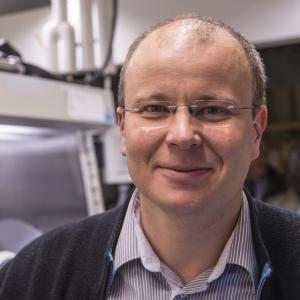
Dmitri Talapin, Ernest DeWitt Burton Distinguished Service Professor, Department of Chemistry, the UChicago PME, and the College
Nanocrystals (NCs) serve as versatile building blocks for the creation of functional materials, including long-range ordered NC superlattices which resemble atomic solids, but assembled of precisely engineered NC “superatoms”. However, insulating organic ligands usually present at NC surfaces prevent the development of strong electronic coupling in NC assemblies. Here we report self-assembly of NCs with compact and conductive inorganic ligands enabling a strong electronic coupling between neighboring NCs and showing evidence of metallic transport. The assembly of charge-stabilized NCs can be rationalized and navigated using phase diagrams computed for spherical particles interacting through short range attractive potentials. The assembly conditions can be tuned to enable either one-step nucleation or non-classical two-step nucleation of supercrystalline solids.
In the case of PbS NCs functionalized with strongly negatively charged chalcogenidometalate ligands, we observed self-assembly of all-inorganic superlattices with both long-range superlattice translational and atomic-lattice orientational order. Structural characterizations reveal that the NCs adopt unexpected edge-to-edge alignment with oriented attachment of crystalline lattices, and numerical simulation clarifies that orientational order is thermodynamically stabilized by many-body ion correlations originating from the dense electrolyte. Furthermore, we show that these superlattices can be fully disassembled back into the colloidal state, which is highly unusual for orientationally attached superlattices. The reversible oriented attachment of NCs, enabling their dynamic assembly and disassembly into effectively single-crystalline superstructures, offers a pathway toward designing reconfigurable materials with adaptive and controllable electronic and optoelectronic properties.
Exploring the Intersections of solid-state and molecular chemistry
Dmitri Talapin
Low-dimensional materials, including nanocrystals and atomically thin sheets, effectively bridge the gap between bulk solids and molecules. I will discuss the integration of concepts from solid-state chemistry, molecular chemistry, and nanotechnology toward development of novel functional materials. For example, we expanded the range of synthesizable quantum dots by developing a new class of colloidal systems—colloids in molten inorganic salts—and successfully synthesized the first colloidal emissive GaAs and GaN quantum dots previously dubbed impossible to access by colloidal methods. In another example, we combined principles from solid-state and molecular chemistry to advance two-dimensional transition metal carbides and nitrides, known as MXenes. These materials combine the robust properties of inorganic 2D crystals with nearly limitless molecular engineering of their surface chemistry enabling efficient control of conductivity, superconductivity, and catalysis.
Dmitri Talapin
Quantum Dots used for displays, lighting, photodetectors, catalysts, and other applications are synthesized by solution-based colloidal methods. The scope of chemical transformations accessible to colloidal chemists is determined by the thermal and chemical stability of the solvents and surfactants employed. For example, very few traditional solvents can tolerate temperatures above 400 °C, whereas the temperatures used in CVD and MBE growth of GaAs and other important semiconductors typically exceed 500 °C.
To expand the range of synthesizable nanomaterials, we are developing a comprehensive understanding of a novel class of colloidal systems: colloids in molten inorganic salts. Nanoparticles of various transition metals, semiconductors, oxides, and magnetic materials can form stable colloids in these highly unusual solvents. Their colloidal stability in molten salts cannot be explained by traditional electrostatic and steric stabilization mechanisms. Our experimental and computational studies suggest that long-range ion correlations in the molten salt near the nanocrystal interface play a crucial role.
Molten salts broaden the scope for solution-based synthesis of many nanomaterials that have been beyond the reach of traditional colloidal chemistry. We have used molten salts to synthesize colloidal GaAs and GaP, InxGa1-xP, InxGa1-xAs, and InxGa1-xSb quantum dots, which resisted numerous synthetic attempts for decades. Most recently, we have turned toward the synthesis of colloidal nitride nanomaterials. By advancing colloidal chemistry in molten salts, we aim to enable synthetic routes to functional materials previously regarded as unsynthesizable by colloidal methods.
Schedule and speakers are subject to change. Check the ACS website for updates.
Related News
-

Polymer insights, biological impact
October 21, 2026Research sheds light on liquid-liquid phase separation, a process that helps cells form life-sustaining structures. -

Matthew Tirrell elected to the National Academy of Medicine
October 19, 2026Tirrell has been elected to the National Academy of Medicine for pioneering the design and synthesis of self-assembling polymers to deliver peptide, protein, and nucleotide drugs in cardiovascular... -
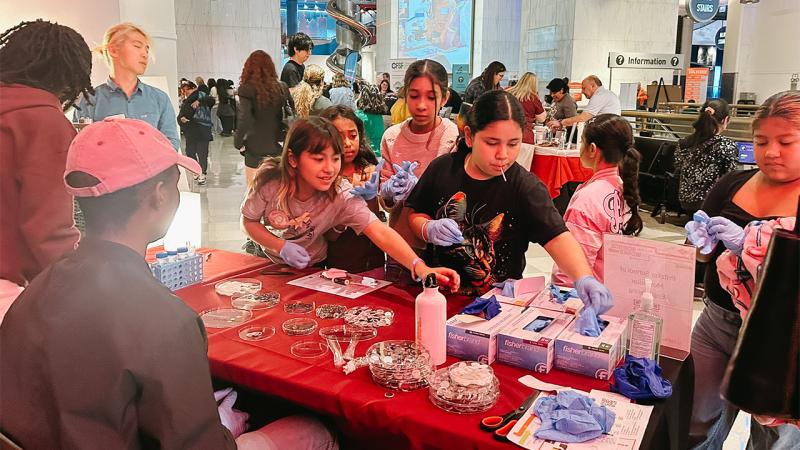
Battery Day lights up the Museum of Science and Industry
October 15, 2026Yearly event has Amanchukwu Lab researchers help children build and understand the batteries that power their lives.