Battery Day lights up the Museum of Science and Industry
Yearly event has Amanchukwu Lab researchers help children build and understand the batteries that power their lives
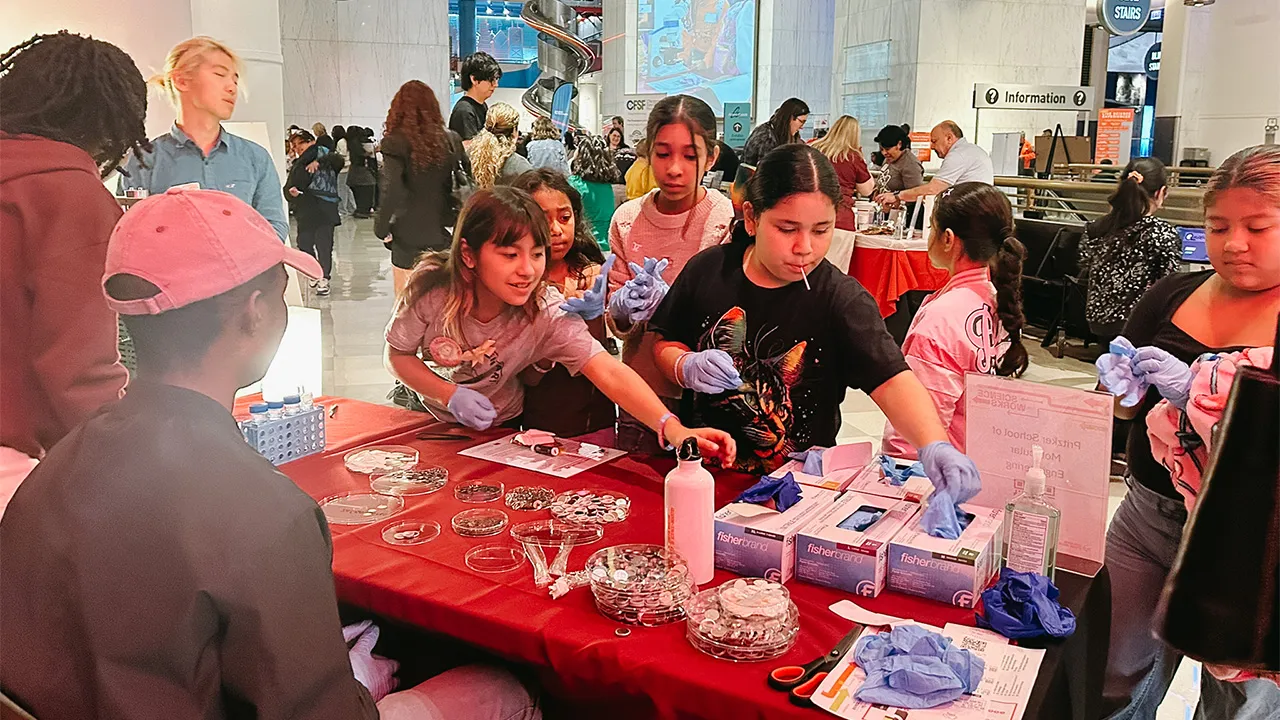
Children swarm to build their own small coin batteries under the guidance of UChicago Pritzker School of Molecular Engineering researchers at the Amanchukwu Lab's yearly Battery Day event, part of the Griffin Museum of Science and Industry's Science Works STEM fair. (Photo by Paul Dailing)
Disaster struck when 9-year-old Daniela dropped the battery. And someone stepped on it.
The fourth grader from Brighton Park on Chicago’s Southwest Side had just completed the small coin battery, now lying in tiny pieces on the museum floor. But she laughed and chattered about what she had just made with her own hands.
“Some toys need batteries to work,” she said. “Batteries are for everything.”
That was exactly the message a group of student volunteers from the University of Chicago Pritzker School of Molecular Engineering (UChicago PME) hoped kids would take away. On Saturday, the students participated in Battery Day, a yearly event run by UChicago PME’s Amanchukwu Lab as part of the Griffin Museum of Science and Industry’s Science Works career celebration.
For the fifth year running, student researchers from the lab of Neubauer Family Asst. Prof. Chibueze Amanchukwu have brought the lab’s battery work to thousands of museum attendees.
“Batteries are a good way to show children that science is a part of our life,” said Amanchukwu. “They use batteries in their toys, in their game controllers and in other electronics they touch and hold every day. It’s a good starting point to show kids that science is everywhere.”
Battery Day has children build their own coin batteries by hand, demystifying the storage technology that quietly shapes the world’s energy and climate future.
“Developing the batteries we'll need for the future requires people who can think deeply about fundamental science while also working across disciplines to imagine creative solutions to hard problems,” said UChicago PME Assistant Dean of Education and Outreach Laura Rico-Beck. “Giving students the chance to engage directly with this kind of research can help them see themselves as part of that work—and can give researchers fresh perspectives on the questions and technologies they're developing.”
The event, just a week after the University of Chicago’s massive South Side Science Festival, is one of many Educational Outreach events UChicago PME runs to bring science to the neighborhood. These include Junior Science Cafés in local middle schools, internships for Chicago high school students, the on-campus No Small Matter Molecular Engineering Fair, innovative partnerships with local nonprofits and the Museum of Science and Industry STEM Showcase which, like Battery Day, is located at the celebrated science museum.
“It’s a lot of excitement, a lot of wonder,” PhD student Jon-Edward Stokes, who has lived in Hyde Park since high school, said of the kids’ reactions.
But the message can go beyond astonishment.
“Just growing up, getting into STEM, I was always the only one in my class who was Black, in my AP Physics class or AP Calculus or whatever,” Stokes said. “Starting students young and showing other Black kids that there are Black people in this field is very important to me.”
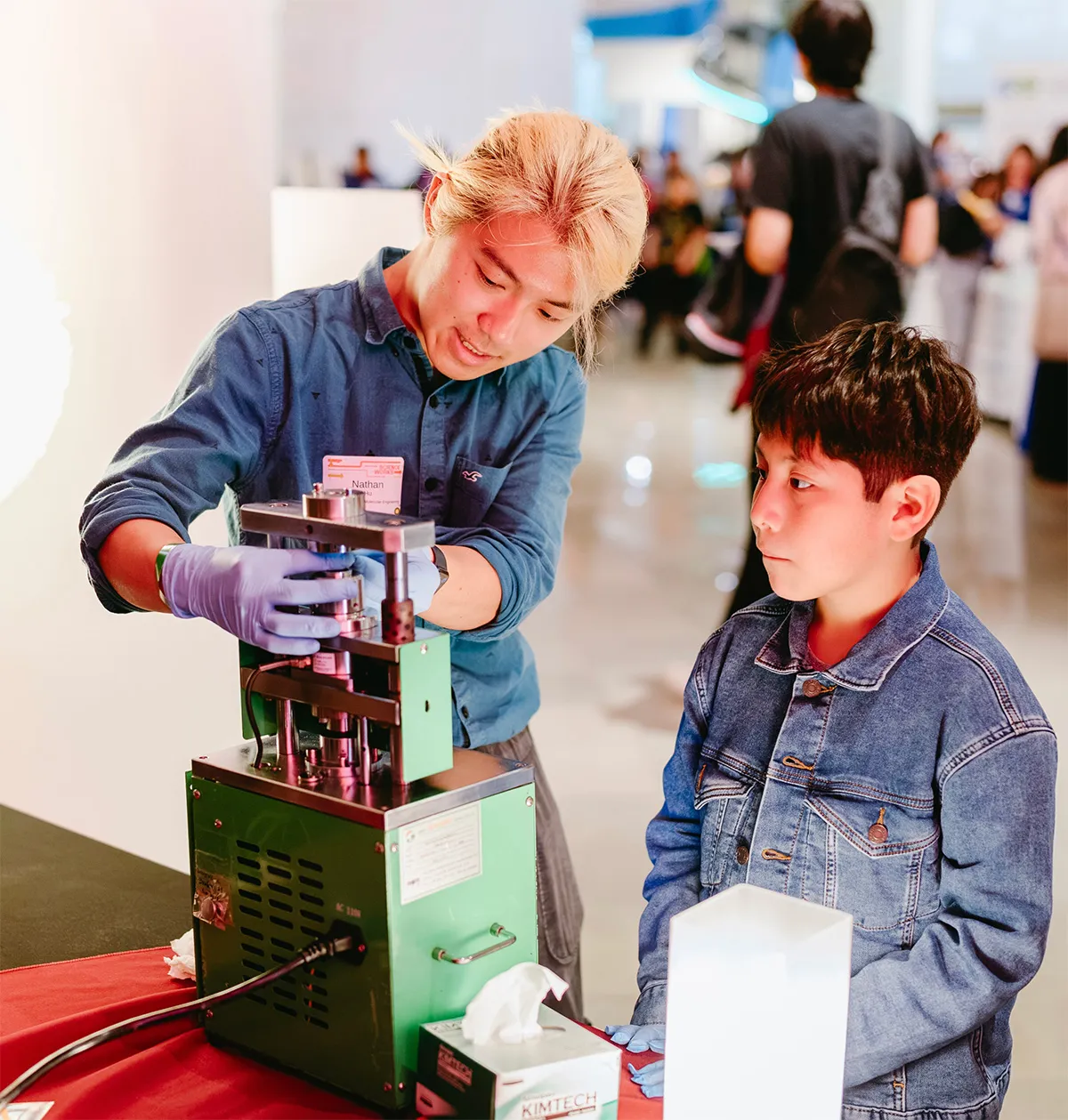
Fellow volunteer Nathan Hu, a fourth-year Molecular Engineering major, tutors children in Hyde Park and surrounding communities when not studying or working as an undergraduate researcher in the Amanchukwu Lab.
“It's very important for us to bring this exposure to science, exposure to hands-on experimentation, to the neighborhood, especially these kids who are so curious about science and how the world works,” Hu said. “It’s important to bring this exposure whether it be in terms of science or in terms of arts or in terms of just education in general.”
Science Works brings an audience of science-loving youth from across Chicago and the surrounding areas. John Merritt brought his children Madeline, 10, and Ethan, 7, from the Old Town neighborhood on the North Side to the museum for the day of STEM and STEAM activities.
“I wanted them to see a future they could build on their own and contribute to,” he said. “It’s a beautiful day – we could be at the park, we could be biking – but my kids are naturally interested in building something that’s great for people, helping people.”
One of the event’s goals, Stokes said, is to get children to realize the batteries that power much of their lives are “two pieces of metal sandwiched together,” physical things they can touch, hold and understand.
Madeline Merritt said she and her brother didn’t think much about batteries before they made their own.
“They told us to push the green button to squish the battery down,” she said, walking through the process, which culminated in the pair testing their new batteries on a tiny light bulb. “I didn't even know if it was going to light up, but now I know it’s going to light up. Both batteries work perfectly.”
Related News
-
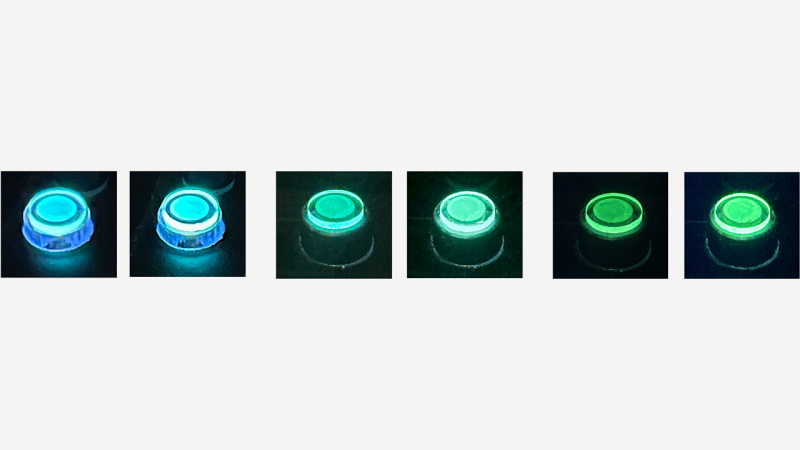
Common plastic additive makes stretchable OLED displays brighter and more elastic
October 13, 2026Research led by a UChicago PME undergraduate found that an everyday plasticizer can boost the efficiency and stretchability of light-emitting polymer films. -
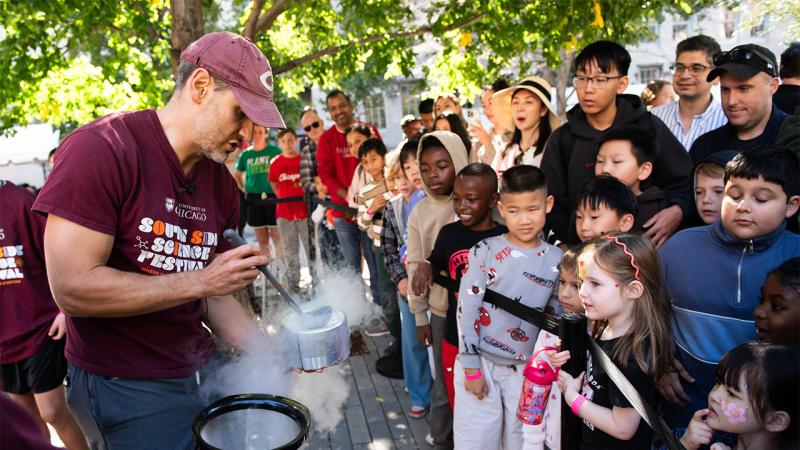
Learning is a blast – and a bang – at the South Side Science Festival
October 08, 2026Dancing robots, mutant Legos and rocks that rock mark the fifth annual UChicago STEM community outreach event. -
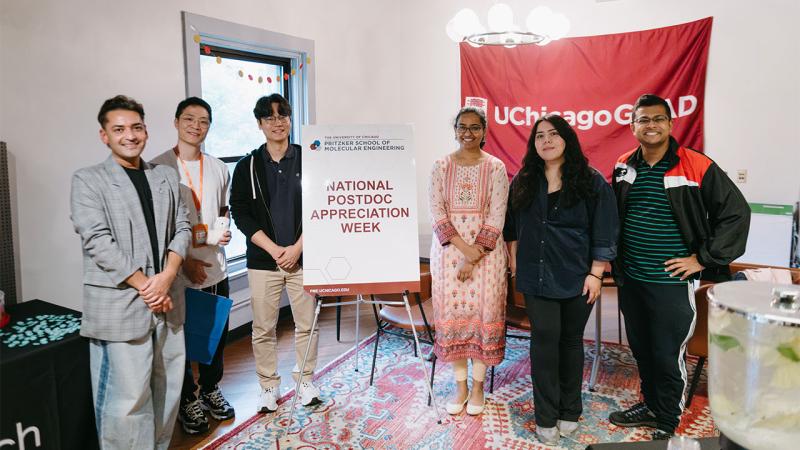
Postdocs help power discovery at UChicago PME
October 01, 20262026 National Postdoc Appreciation Week honors postdocs, marks 150th anniversary of the first postdoctoral researcher in the U.S.