‘The Midwest is the place in the US for quantum sensing’
Applied Materials chose Chicago for an October workshop aimed at accelerating the deployment of quantum sensors for industries that need them. They were drawn by the Midwest’s talent pipeline, research base, and ecosystem supports.
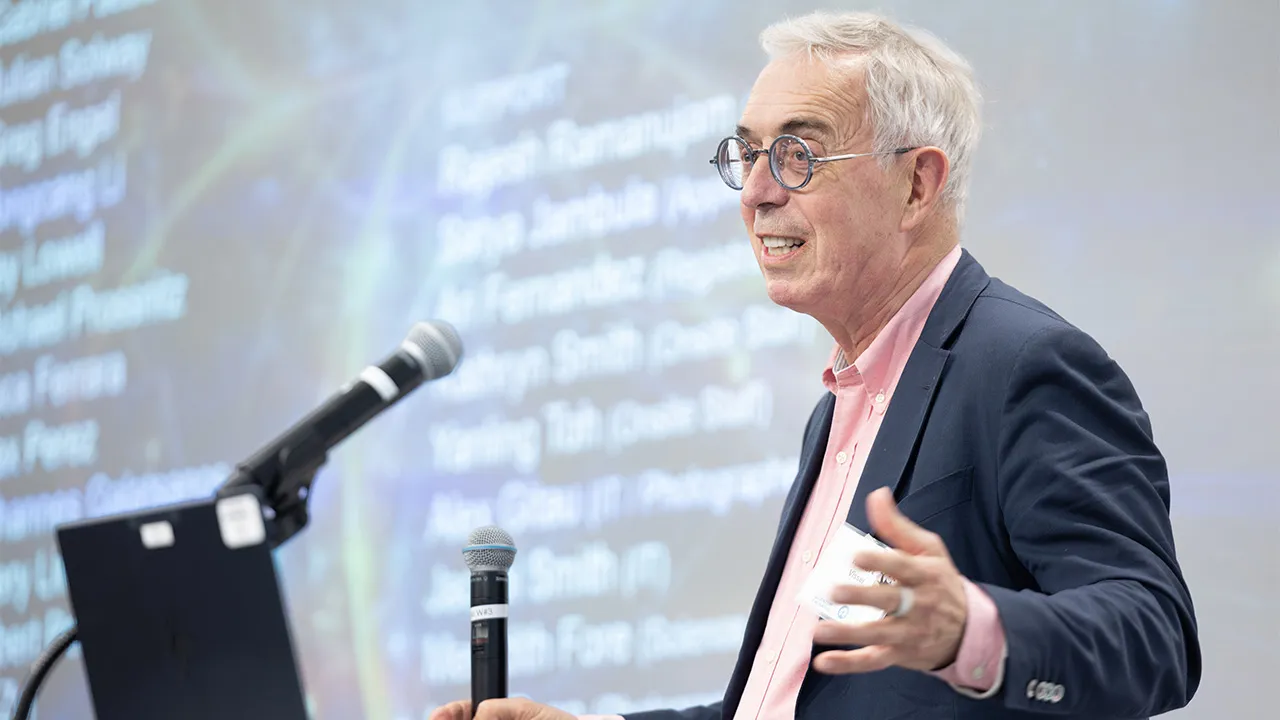
“The Midwest is the place in the US for quantum sensing,” said Robert Visser, vice president in Applied Materials CTO Group (Anne Ryan)
The fundamental building block of quantum technologies, the qubit, is very fragile: the smallest perturbation is enough to collapse its quantum state. For quantum computing, this fragility is a bug, one researchers are working to overcome through physical design, error correction techniques, noise suppression, and a host of other strategies. For quantum sensing, however, it’s a feature — an extreme sensitivity researchers can exploit to measure gravity, magnetic fields, temperature, strain, or movement with unprecedented precision.
Quantum sensing is widely considered the quantum technology closest to broad, real-world deployment, with potential uses in semiconductor factories, hospitals, and vehicles such as aircraft and submarines. To help chart that path, Applied Materials, a California-based semiconductor equipment maker that regularly convenes diverse stakeholders to identify “big inflections” that will shape the world, decided to convene a workshop. Typically, they host gatherings like this near their home base in Santa Clara.
This time, though, they wanted to be in the Quantum Prairie, which is recognized for its research foundation, talent pipeline, and ecosystem supports.
“The Midwest is the place in the US for quantum sensing,” said Robert Visser, vice president in Applied Materials’ CTO Group. “We got amazing support here, so we thought why not do something different? And it was very successful.”
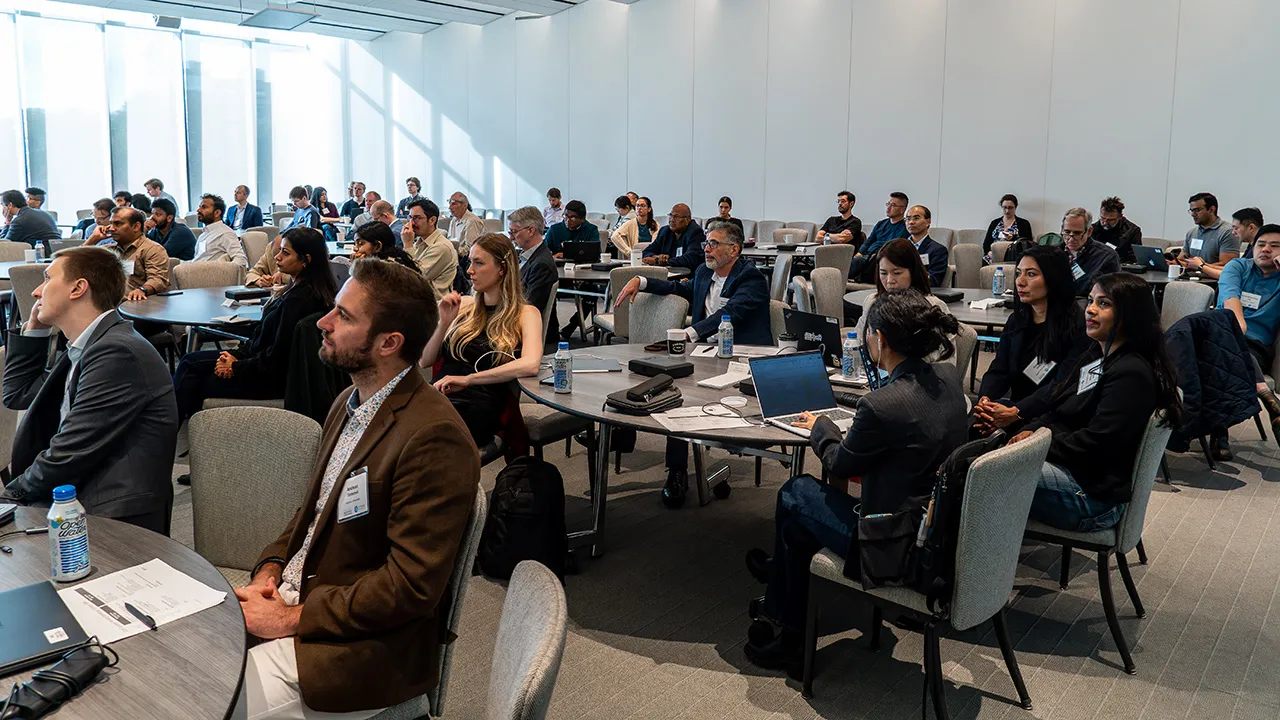
The workshop, cohosted by the CQE and held on October 30 at the University of Chicago’s Rubenstein Forum, drew researchers, industry leaders, students, and six quantum sensing startups, nearly all from the region.
“Quantum sensing is where the field’s promise is becoming tangible, and it’s happening in a region that has built an ecosystem to support it,” said David Awschalom, director of the Chicago Quantum Exchange and the Liew Family Professor of Molecular Engineering at the University of Chicago. “A quantum sensor can’t become a product until the scientist who invents it meets an engineer who can scale it and an investor who can fund it. Part of the CQE’s role is to convene these groups, helping them to meet and collaborate and make connections they may not have been able to otherwise.”
Semiconductors, medicine, and navigation: problems quantum sensors can solve
The day-long program focused on three industries where better measurement tools could change what’s possible: semiconductor manufacturing, the medical and life sciences, and positioning, navigation, and timing.
For semiconductor manufacturing, talks explored how techniques from semiconductor manufacturing can make quantum sensors easier to scale, and how quantum sensors can in turn improve chipmaking. For example, quantum sensors can detect buried currents, shorts, and surface defects with greater accuracy and precision than current methods. Companies such as EuQlid, LeviSens, and QZabre presented their product offerings that fulfill these tasks.
In medical and life sciences, professors Julian Solway and Greg Engel of the University of Chicago and Tongcang Li of Purdue University discussed bridging biology, physics, and medicine, fields whose researchers have different vocabularies and priorities. Engel and Solway used the continuous glucose monitor as an example of how there are different concerns from the perspective of the clinician, the physical scientist, the biologist, and the company.
“Four sets of languages and points of view need to be communicated to each other,” said Solway. “Each person on the team is of course a deep expert in their own field, but they have to be sufficiently familiar with the language of the others on the team to work together effectively.”
Possible applications for quantum sensors include tracking drugs through the body, making lab results real-time instead of hours later, and studying cell aging. Solway and Engel are co-directors of the Berggren Center for Quantum Biology & Medicine at UChicago, an interdisciplinary effort to use quantum engineering to answer questions and find solutions in medicine and biology.
“Quantum sensing is not new to medicine—MRI, which uses quantum spin, is already a first-generation quantum sensor,” said Li, who is also the director of the Center for Quantum Technologies (CQT), an NSF Industry/University Cooperative Research Center to develop novel quantum technologies to address significant industry challenges. “The next generation of sensors could take us from seeing structures about half a millimeter wide to seeing individual molecules.”
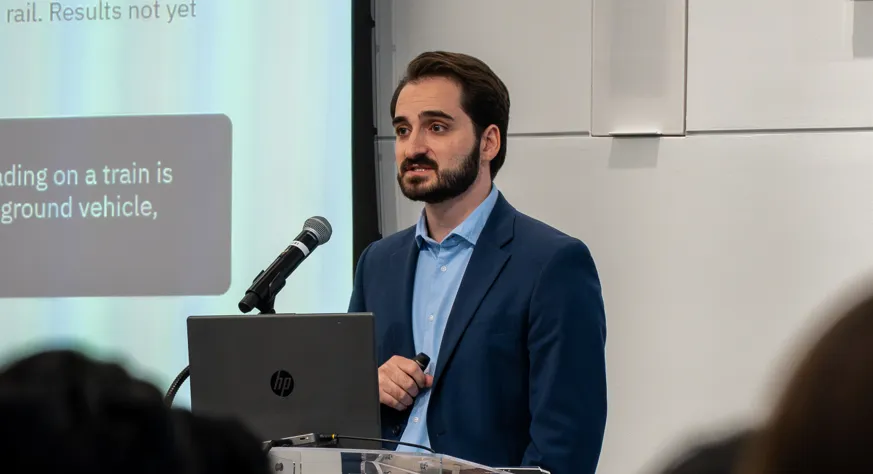
GPS-denied environments, disruptions, and spoofing are growing concerns for commercial and military aviation; about one in 10 commercial flights has its GPS signal disrupted at some point. Using quantum sensors for navigation represents a secure solution, one that can’t be interfered with. Boeing and SandboxAQ described test flights using quantum sensor navigation. Infleqtion spoke about timing, sea- and ground-based navigation, gravity sensing for NASA, and its collaboration with Quantum Corridor on ultra-precise network timing.
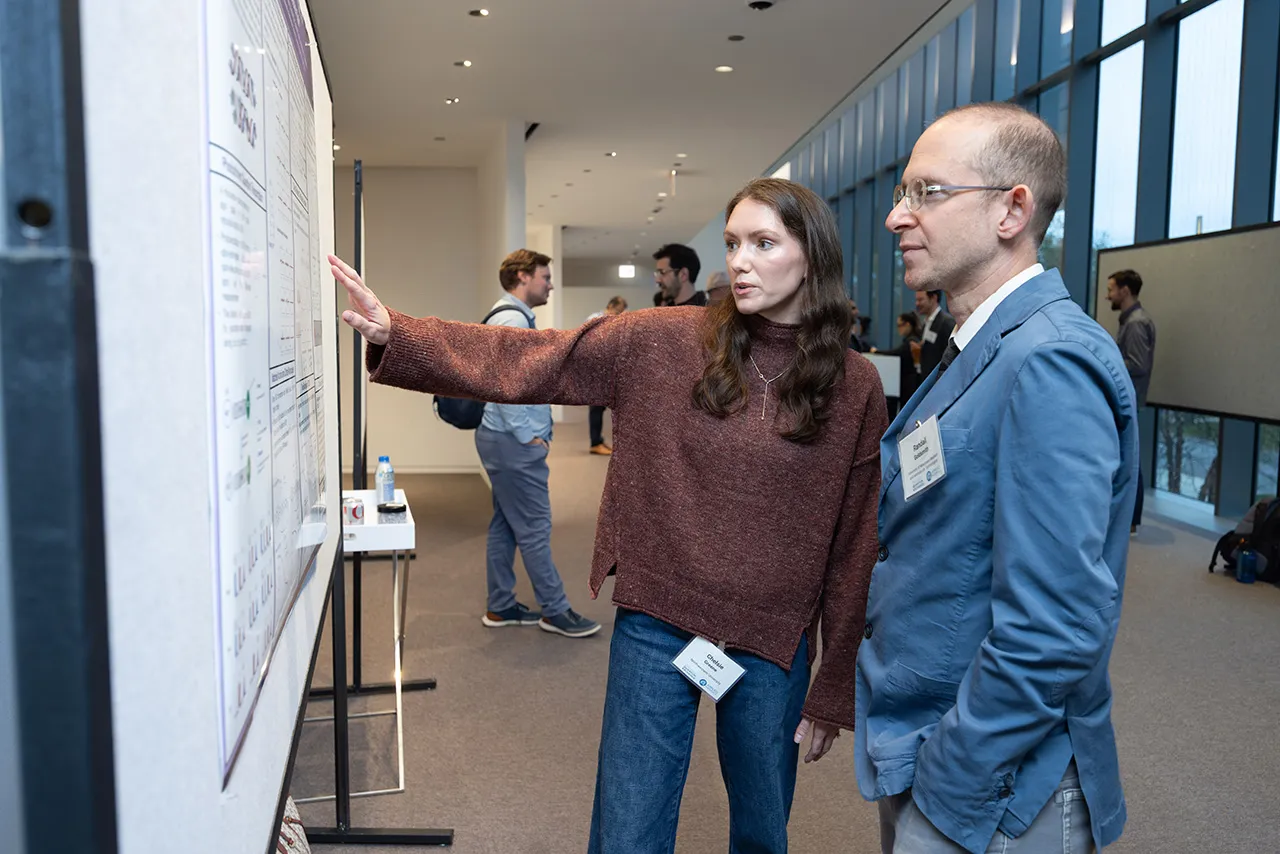
In addition, founders from startups including staC12, memQ, Qualla Labs, Animolecule, K1 Semiconductor, and Diffraqtion gave quick pitches on what they’ve accomplished and what’s next, speaking directly to investors and potential collaborators. A poster session and reception followed, giving attendees a chance to network.
From lab demonstrations to working sensors
Much of the foundational science behind quantum sensing has been established, speakers repeatedly noted. The remaining challenges are largely engineering: shrinking devices, making them more robust, and integrating them into systems that work outside the lab. A plane, a ship, a drone, or a car is an electrically noisy environment, as is a hospital. The importance of field testing and supply chain security emerged as themes throughout the day. The near-term target is to compete with classical sensors in cost and size, now that many quantum sensors have proven superior in accuracy and precision.
“The physics is proven out—there’s no technical question on whether [quantum sensors] work or whether or not they’ll be important,” said Michael Prossnitz, government affairs liaison at Mesa Quantum, a startup developing quantum sensing technology for integration at scale. “The key part here is everything else. How do we get them into a small enough package at the right price point to be applicable in more use cases?”
For students, the showcase of the breadth of the field was a highlight. Leo Chou, a student in the Pritzker School of Molecular Engineering’s molecular engineering master’s program said that while he knew quantum sensing was a field, he hadn’t realized how wide it could be. “It was particularly interesting to hear how many problems there are in the real world, and how everybody has a different solution to it,” he said.
Organizers said the value of the day lies in the connections it creates.
“The real action starts after the workshop, when people meet each other and understand the problems that the industry is facing in turning an idea into a business,” said Om Nalamasu, senior vice president and CTO of Applied Materials and president of its venture arm, Applied Ventures. “I certainly hope the same thing happens here.”
Related News
-
UChicago PME startup K1 Semiconductor selected as Breakthrough Energy Fellow
November 19, 2026Program provides funding, mentorship, and a global network to help bring climate tech to market. -
Five from UChicago PME among world’s most highly cited researchers
November 18, 2026Five scientists from the University of Chicago Pritzker School of Molecular Engineering (UChicago PME) have been honored as 2026 Clarivate Highly Cited Researchers. Every researcher who appears on the... -
New CQE report reveals the Quantum Prairie’s hidden talent pipeline
November 11, 2026Analysis finds Illinois, Indiana, and Wisconsin are producing quantum-relevant talent at above-average rates, with complementary strengths across the region.