UChicago to collaborate with Tohoku University to bolster quantum research and education
Agreement establishes joint research framework in Japan, with distinguished visiting professorships and shared access to leading facilities
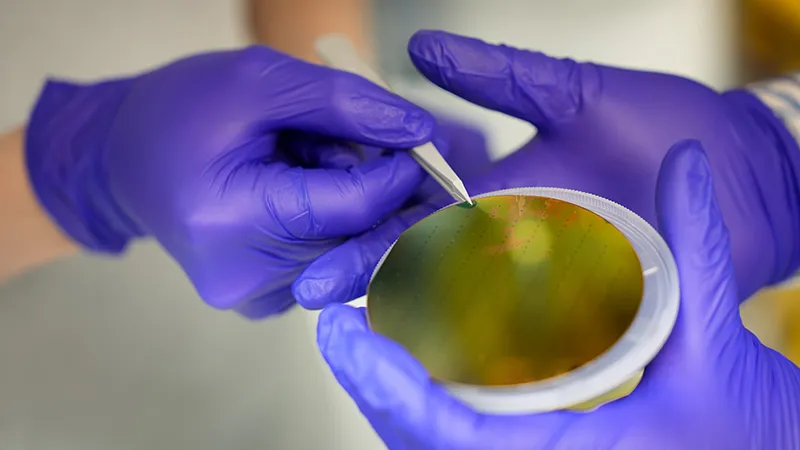
(Photo by Jason Smith)
The University of Chicago and Tohoku University in Japan have formed a collaboration, beginning with an initial five-year term, to bolster quantum technology, drive innovation, support faculty and student research, and help train the next generation of the quantum workforce.
Under the agreement between Tohoku’s Research Institute of Electrical Communication and the University of Chicago’s Pritzker School of Molecular Engineering, the unique partnership will include the opening of two dedicated laboratory spaces at Tohoku for collaborative research. The universities also anticipate developing faculty and student exchange opportunities that will give students at each institution the opportunity to research and study at the other institution.
The collaboration is part of Tohoku’s University for International Research Excellence designation, which is funded by the government of Japan. Tohoku also will provide annual funding to support collaborative research activities.
The two universities bring complementary strengths to the partnership in the rapidly growing field of quantum technology. The University of Chicago is one of the world’s leading research institutions, with deep expertise in fundamental quantum science through the UChicago Pritzker School of Molecular Engineering’s Chicago Quantum Institute. It also sits at the center of the Midwest’s growing quantum innovation ecosystem, which includes the Chicago Quantum Exchange, an intellectual hub based at UChicago to advance research in the field. Tohoku University is internationally known for its engineering and materials science research programs and facilities.
The agreement is the most recent in a series of partnerships between companies and universities in Japan and Chicago in the field of quantum science. At the 2023 G7 Summit in Japan, UChicago, the University of Tokyo, IBM and Google announced partnerships to advance workforce development and quantum computing. Later that year, Tohoku and UChicago formed the Chicago-Tohoku Quantum Alliance, building on a research relationship between the two institutions that spans more than three decades.
“Quantum engineering is an emerging field, and as with all such fields, many of the biggest advances will be made by collaboration,” said David Awschalom, the Liew Family Professor in Molecular Engineering and Physics at the UChicago Pritzker School of Molecular Engineering and founding director of the Chicago Quantum Exchange. “By bringing together Tohoku University’s strengths in materials science and device engineering with the University of Chicago’s expertise in quantum science and engineering, this new hub will create an integrated pathway, from materials discovery to the development of quantum devices.”
“By connecting theory and computation with materials and device research, we hope this hub will broaden both the scope of quantum science and the range of researchers contributing to it,” said Giulia Galli, the Liew Family Professor of Electronic Structure and Simulations at the UChicago Pritzker School of Molecular Engineering and Department of Chemistry, who, along with Awschalom, has been named an inaugural distinguished visiting professor at Tohoku’s International Research Excellence unit. “Bringing researchers from different fields together can open new directions that would not emerge within a single discipline.”
Through this partnership, researchers aim to work across the full technology development cycle, from predicting and identifying potential materials to fabricating and evaluating new quantum devices. They will also have opportunities to access Tohoku resources, including NanoTerasu, an accelerator that provides extraordinarily brilliant X-rays, to investigate the structures and electronic states of materials.
A new quantum workforce
The new quantum program aims to foster a new generation of the quantum engineering workforce, preparing students based in both the U.S. and Japan for careers in the rapidly growing field. Both Awschalom and Galli, as distinguished visiting professors at Tohoku, will mentor Tohoku-affiliated graduate students and postdoctoral researchers, host joint workshops and identify new collaboration opportunities — an arrangement designed to boost technological innovation at both institutions and foster the quantum workforce of the future.
“Quantum is a global field, and the talent pipeline has to be global too,” Awschalom said. “This partnership will provide unique opportunities for students and faculty to collaborate with leading minds across the world and lay the foundation for the quantum workforce of the future.”
Entrepreneurship will also be a focus area. With guidance from UChicago, Tohoku plans to expand public-private partnerships and startup incubation, including a quantum incubator modeled on UChicago-based Duality, the first accelerator program in the U.S. exclusively focused on supporting innovative quantum startups. Duality is led by UChicago’s Polsky Center for Entrepreneurship and Innovation and partners with the Chicago Quantum Exchange.
UChicago and the Chicago Quantum Exchange are part of a growing quantum ecosystem in the Midwest built on a foundation of institutions that are home to some of the world’s leaders in quantum science – including the U.S. Department of Energy’s Argonne National Laboratory and Fermi National Accelerator Laboratory, the University of Illinois Urbana-Champaign, the University of Wisconsin–Madison, Northwestern University, and Purdue University—and bolstered by hundreds of millions of dollars in government and corporate investment and deep local, state and international partnerships.
The Midwest region is home to a quantum communications network, as well as to four of the National Quantum Initiative Act’s 13 quantum science research centers and institutes: Q-NEXT and the Superconducting Quantum Materials and Systems Center, both funded by the U.S. Department of Energy; and the Quantum Leap Challenge Institutes for Quantum Sensing for Biophysics and Bioengineering and Hybrid Quantum Architectures and Networks, funded by the National Science Foundation. The ecosystem also includes the $55 million Bloch Quantum Tech Hub; economic and workforce development nonprofits; the University of Illinois Chicago and Chicago State University, both minority-serving institutions that are leaders in the Quantum Information Science and Engineering Network (QISE-NET) training program; and a growing number of quantum startups and other businesses.
Related News
-
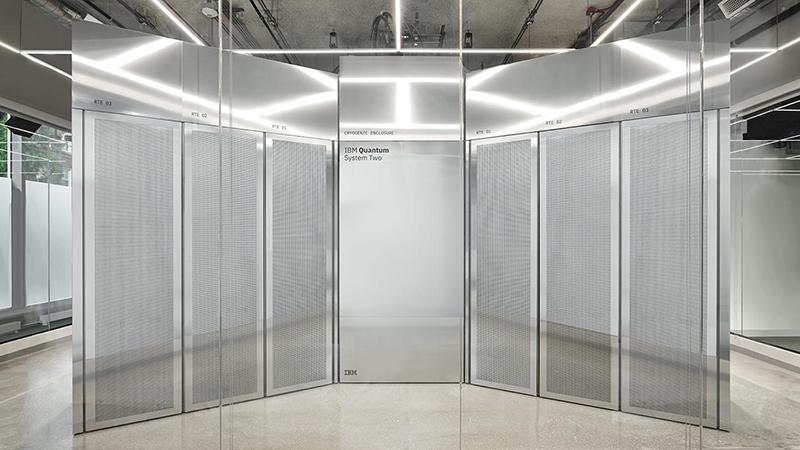
IBM’s most advanced quantum computer unveiled at UChicago’s Hyde Park Labs
November 06, 2026IBM Quantum System Two marks a milestone for the University’s quantum partnerships and for state of Illinois. -

Quantum research leads to startup for PhD Student
November 05, 2026Sagar Kumar Seth, PhD’26, has found success in commercializing the processes he helped develop as a graduate student studying quantum engineering. -
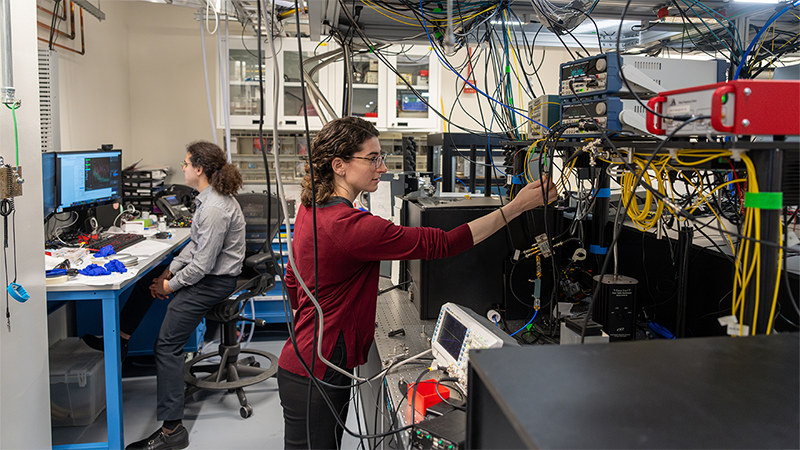
UChicago, Toyota collaborate to advance quantum technologies for future mobility and transportation
November 03, 2026The University of Chicago and Toyota have entered into a multi-year collaborative research agreement to accelerate the development of quantum technologies for future mobility, sustainable...