
From undergrad to faculty, UChicago Pritzker Molecular Engineering represented at ACS
Yearly American Chemical Society gathering brought the scientific world to Chicago for 2026
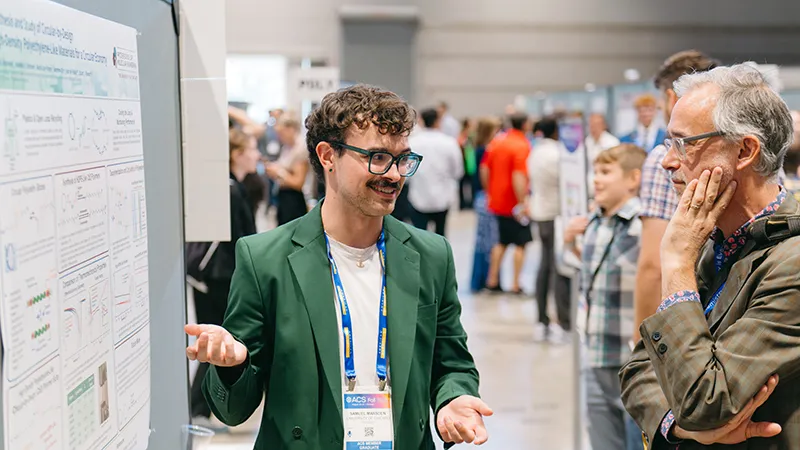
Sam Marsden, a PhD student in the University of Chicago Pritzker School of Molecular Engineering Rowan Group, presented his research at the 2026 American Chemical Society Fall Meeting, held Aug. 23-27 at the McCormick Place Convention Center. (Photo by Elaina Eichorn)
Each year, the American Chemical Society fall meeting is a chance for old colleagues to connect and cutting-edge researchers to exchange and develop world-changing ideas.
For University of Chicago undergraduate and first-time attendee Samantha Alderden, the 2026 Fall Meeting in Chicago was a chance to find her people.
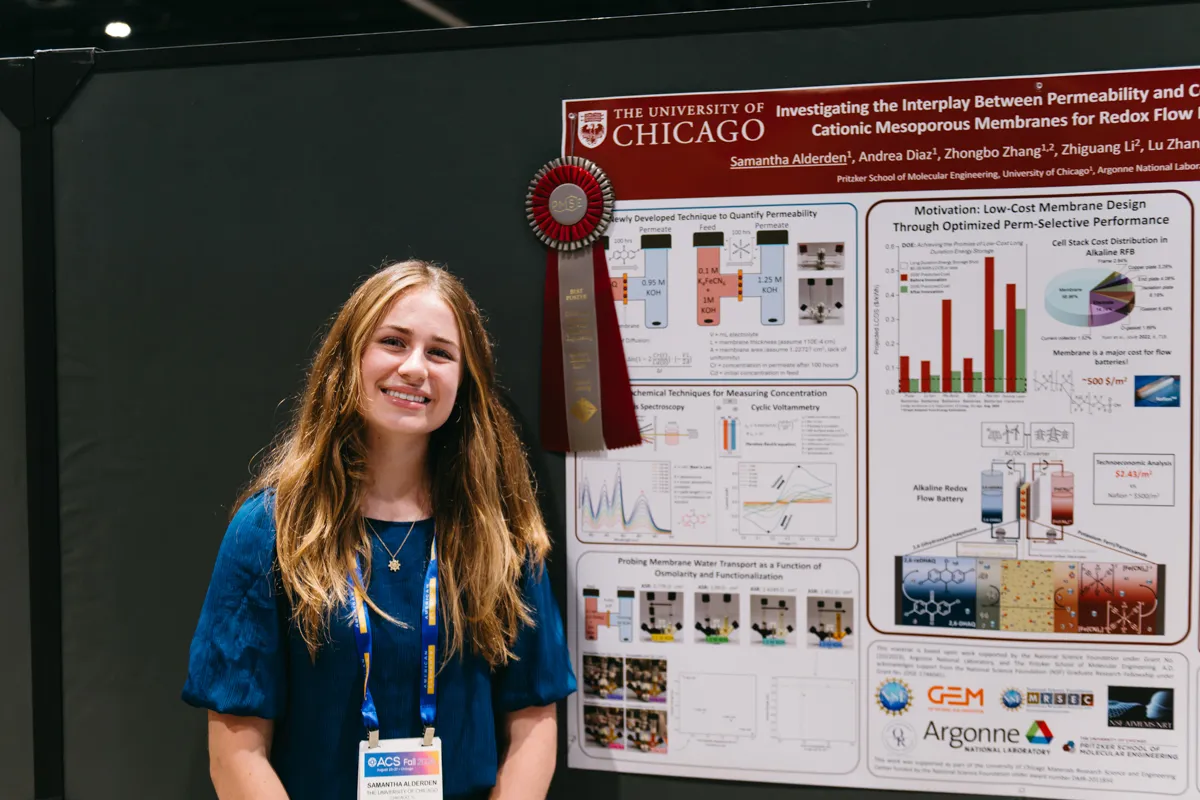
Alderden presented her research in the lab of UChicago Pritzker School of Molecular Engineering Assoc. Prof. Shrayesh Patel under PhD student mentor Andrea Diaz as part of the in-person poster sessions.
“I was a little bit nervous, but it’s really cool being able to form networks of people,” Alderden said. “At UChicago, because our project is very niche, sometimes it’s hard to find people that know exactly what I’m talking about. But here, when I explain my poster to someone, some people are exactly in that same field and know exactly what I’m talking about.”
Alderden excelled as one of three undergraduate students to receive the “Best Poster” award in the Polymer Material Science and Engineering (PMSE) Division. She was one of the many UChicago PME students, postdocs and faculty who attended the 2026 ACS Fall Meeting held Aug. 23-27 at the McCormick Place Convention Center.
“Having ACS right here in Chicago is an extraordinary opportunity to share the work happening at UChicago PME,” said Interim Dean Stuart Rowan. “Our faculty, students, and postdoctoral researchers are pushing the boundaries of science in ways that can make a real difference in the world. It’s exciting to have colleagues from around the globe here in our city and to be part of that exchange.”
Reflecting the changing understanding of chemistry, the ACS conference was a cross-disciplinary affair, with UChicago PME faculty members delivering talks on topics from clean water to energy storage to computational design to quantum technologies.
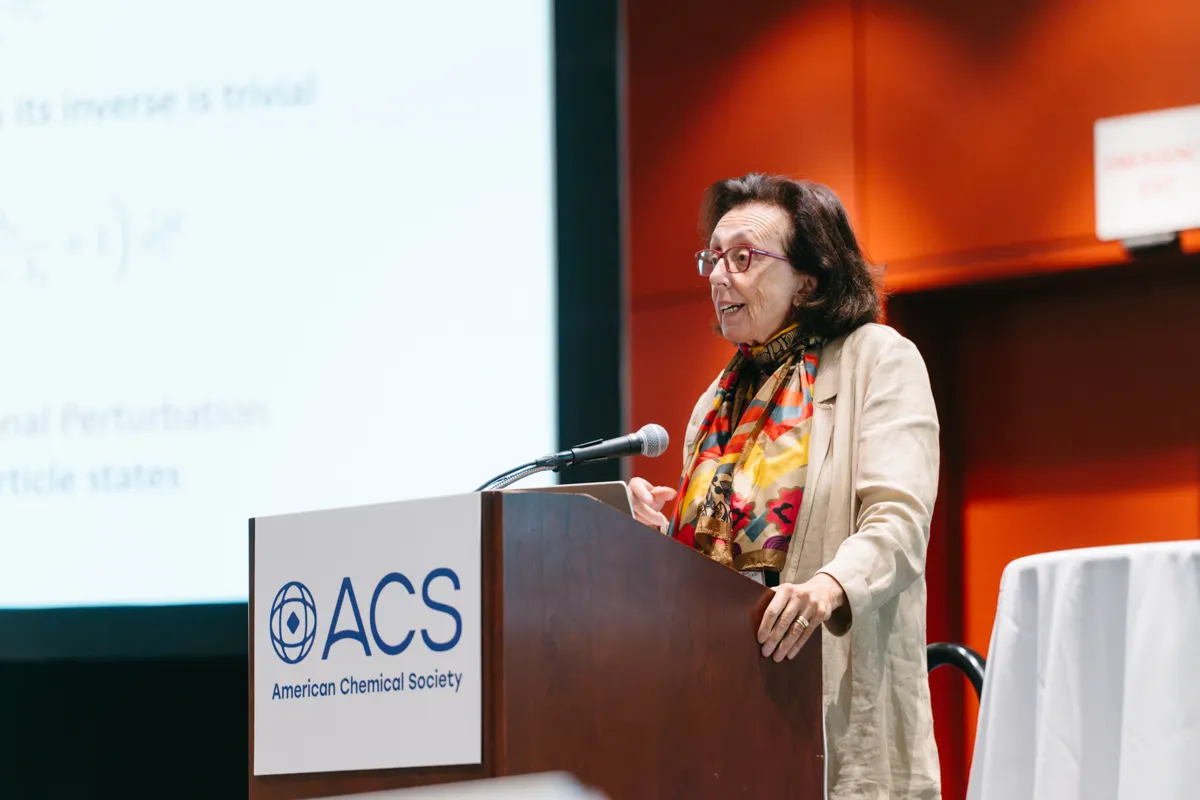
“ACS sessions and symposia included an increasing number of interdisciplinary topics, especially in quantum science, opening up opportunities for future collaborations between researchers in diverse fields,” said Liew Family Professor of Molecular Engineering Giulia Galli, who presented four talks at the conference.
That intellectual diversity was a huge appeal for Amanchukwu Lab postdoctoral scholar Zhiyuan Han.
“I think the most exciting part is that you can discuss your research with different people with different research backgrounds,” said Han, who presented research on molten salt in sodium metal batteries during the poster session. “Because ACS brings together a diverse audience, the people I talk to can give me some suggestions or ask me some questions from a different perspective. This can help me to rethink my project.”
Although it was her first time presenting at a conference of ACS’ scale, PhD student Hannah Hassoun in the Junhong Chen Research Group said her conversations during the poster session were enjoyable and informative.
“In grad school, you get very comfortable talking a lot to explain your work. I've had some good conversations with people,” she said.
Hassoun presented research on building a real-time cobalt detector.
“I’m interested in cobalt because it is an important material for cathodes in lithium-ion batteries. We're basically trying to develop sensors for detecting cobalt in real time, so that we can optimize recycling processes or recovery from waste streams,” she said.
Outside of the poster sessions, PhD student Niansong Shan, who is co-advised by Assoc. Prof. Sihong Wang and Prof. Paul Nealey, was one of the UChicago PME students who had an opportunity to present a talk at the conference.
“As a PhD student, I think opportunities like this are truly invaluable—they let me engage face-to-face with leaders in the field, which is a completely different experience from just reading their papers. The conference also gives me the chance to connect with fellow graduate students from around the world working in similar areas, and those conversations help me refine my own experimental approach and details. Beyond that, it's a great way to learn about potential career opportunities down the road,” said Shan, who gave a lecture on polymerized ionic liquids.
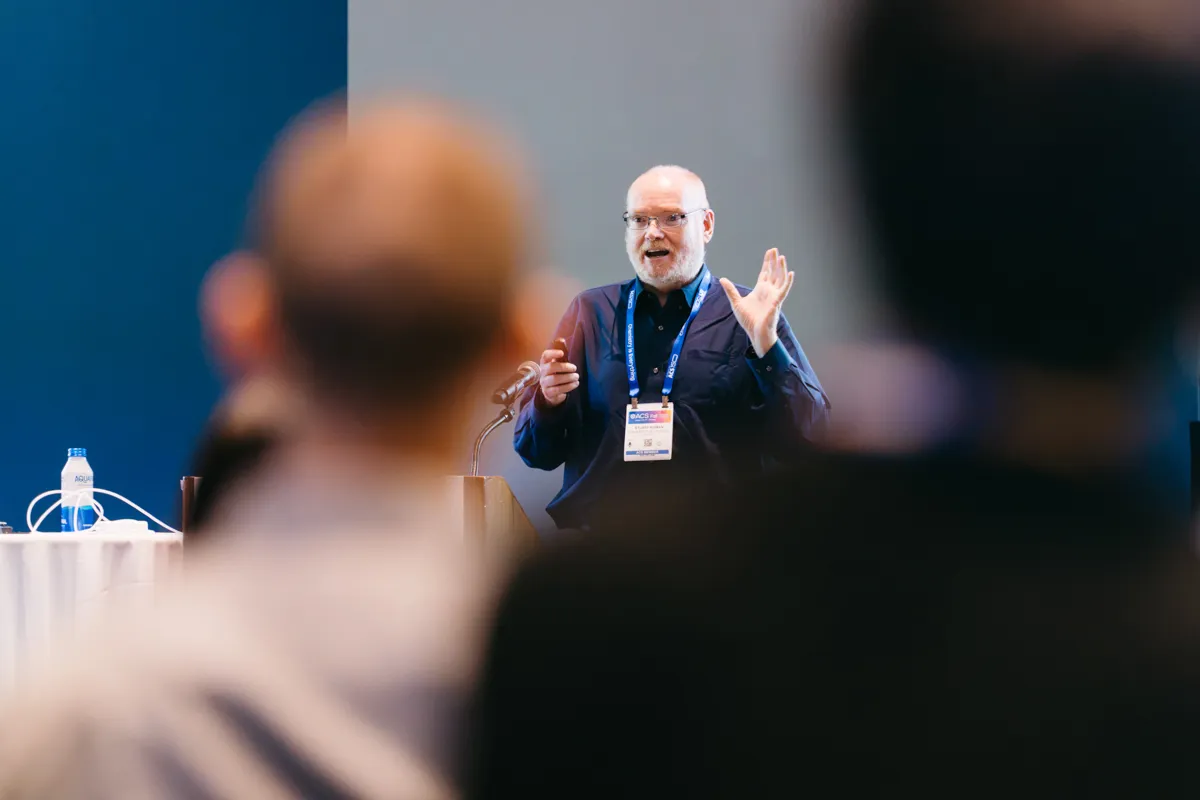
The conference also helps bring together minds from around the globe to collaborate on intriguing questions. UChicago PME and Chemistry Department Prof. Greg Engel, co-director of the Berggren Center for Quantum Biology and Medicine, gave a talk on a “provocative data set” his lab uncovered that challenges long-held assumptions about chirality in energy dynamics.
“We knew we had something strange and we didn’t know what it was, which is why there’s such a long heritage on this,” he told the crowd gathered for his ACS talk. “This is an interesting challenge that people in the audience might want to engage with.”
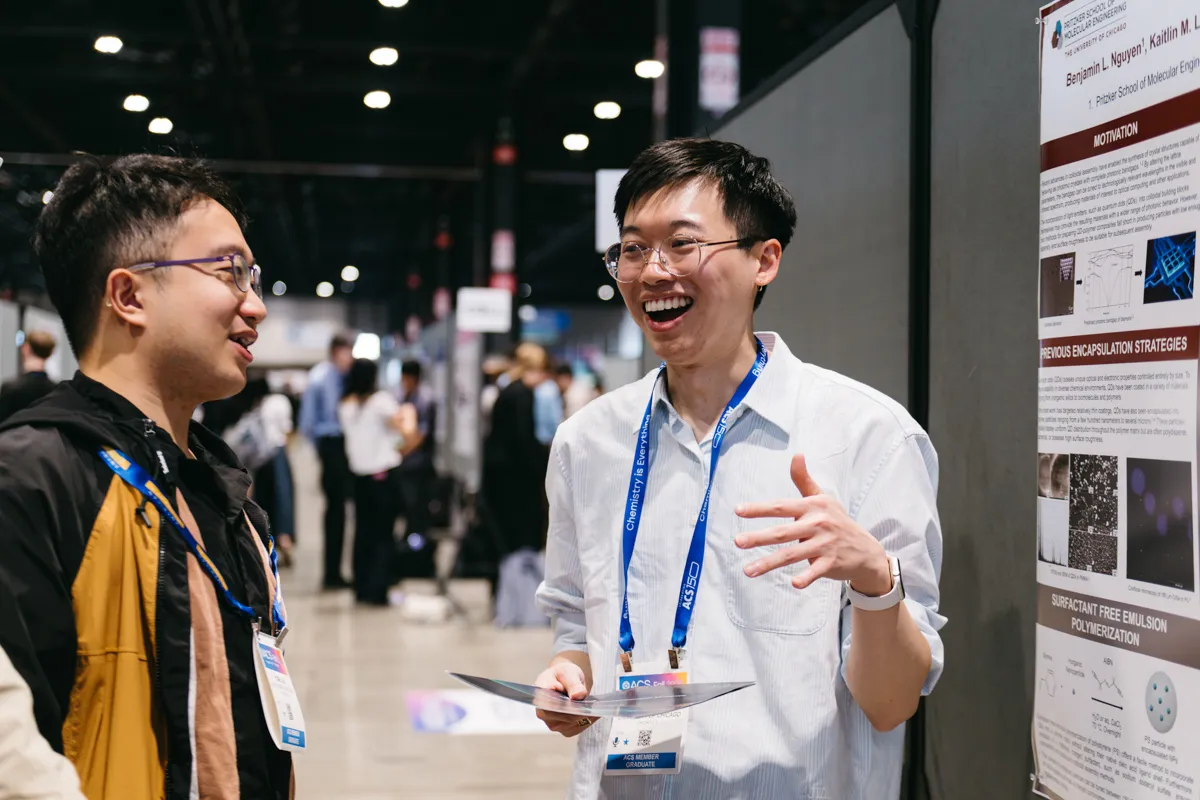
Building that community of thinkers and creators starts early on in a scientist’s career. For the undergraduate Alderden, the conversations and talks at ACS served as an early introduction to that global community.
“It’s really cool being able to go to sessions and understand what’s happening, and also see people who are working on the same things that I’m working on,” Alderden said. “It’s been a wonderful experience building connections with them.”
Related News
-
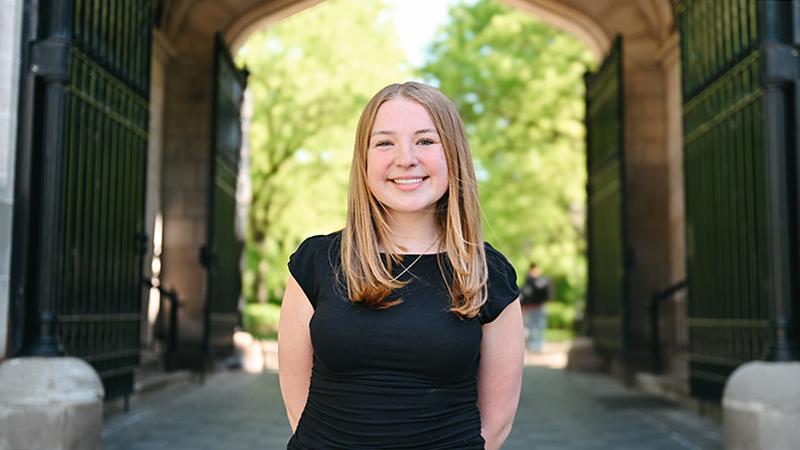
From a London carbon capture plant to a UChicago PME lab
September 21, 2026Master’s student Caitlin McGrath's passion for renewable energy carried her across the Atlantic and back—to hands-on research in an electrochemistry lab. -
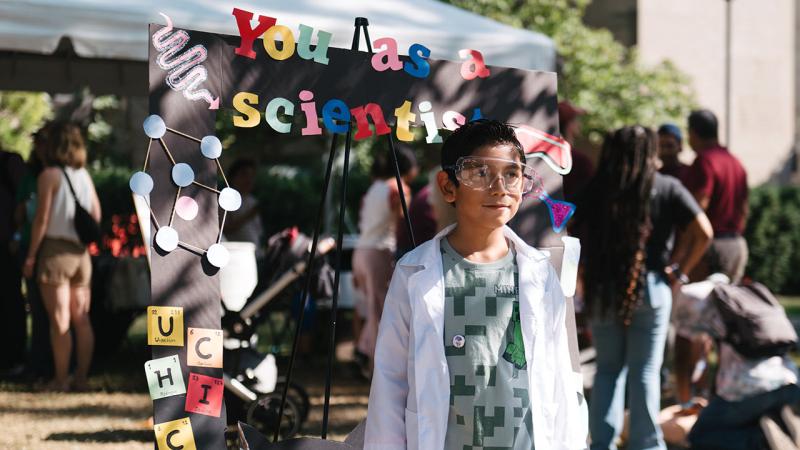
South Side Science Festival returns Oct. 3
September 16, 2026Annual community gathering invites the South Side to the UChicago campus for a day of science and fun. -

Harnessing AI to find new materials
September 10, 2026PhD student Rodrigo Pires Ferreira uses his talents for problem solving to discover new materials for future technologies.