Alumni-founded startup Rise Reforming joins Y Combinator
Startup formed by former molecular engineering majors joins storied accelerator after pivoting to new fuel source
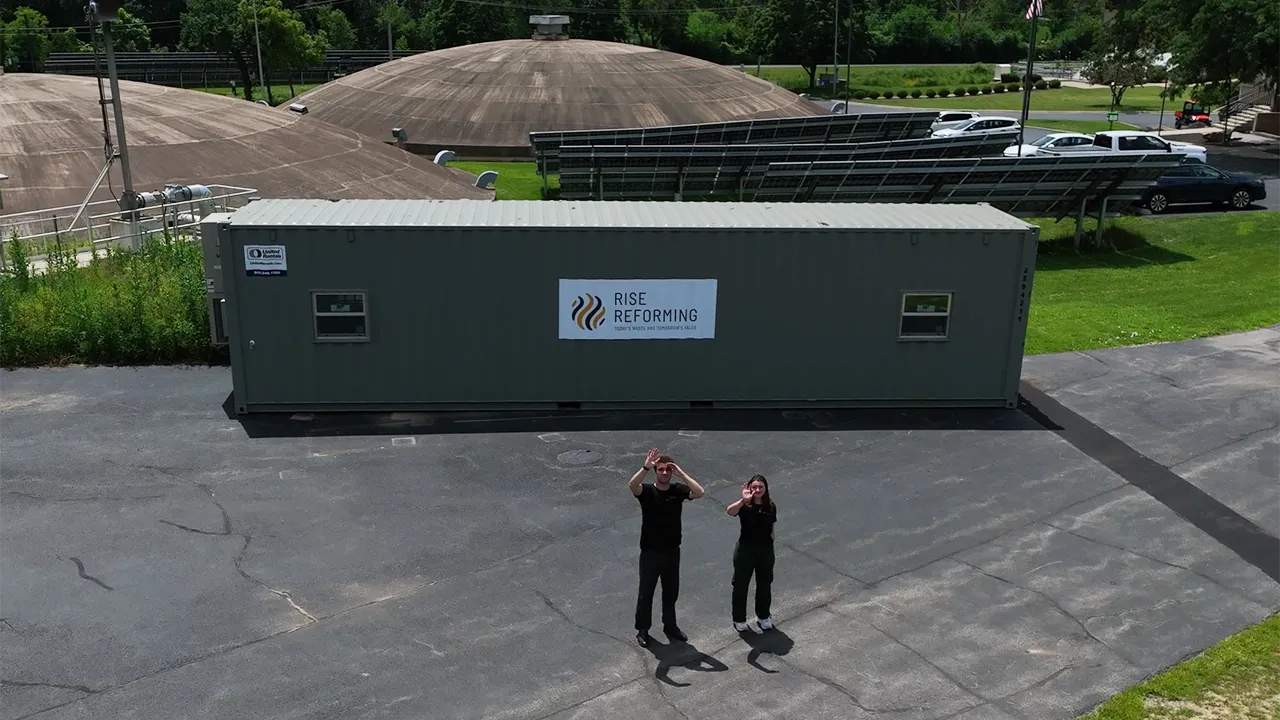
Alumni-founded company Rise Reforming joined technology startup accelerator Y Combinator, which provides funding, support, and mentorship. (Image courtesy of Rise Reforming)
A startup created by University of Chicago Molecular Engineering undergraduates has joined the startup accelerator that brought AirBnB, Reddit, Dropbox, and DoorDash to the world.
Rise Reforming - formed by George Rose, SB’25, Lucas Zubillaga, SB’25, and Jona van Oord, SB’26, during their undergraduate studies at UChicago - converts waste gases into supply-secure, low-carbon dimethyl ether (DME), methanol, and other chemicals, helping both environment and economy. They have been selected for Y Combinator’s Summer 2026 batch.
Every three months, Y Combinator (YC) selects promising companies, providing funding, support, and intensive one-on-one mentorship to help bring them to the next level.
“There are plenty of companies with great technologies in the chemicals space. We think we are one of them. But it seems that the ones that ultimately succeed aren’t the ones with the best science – they’re the ones that can effectively sell a lot of chemicals,” said Rose, co-founder and CEO. “We’re doing YC to close many more big purchase orders and build the commercial engine needed to rapidly scale this company.”
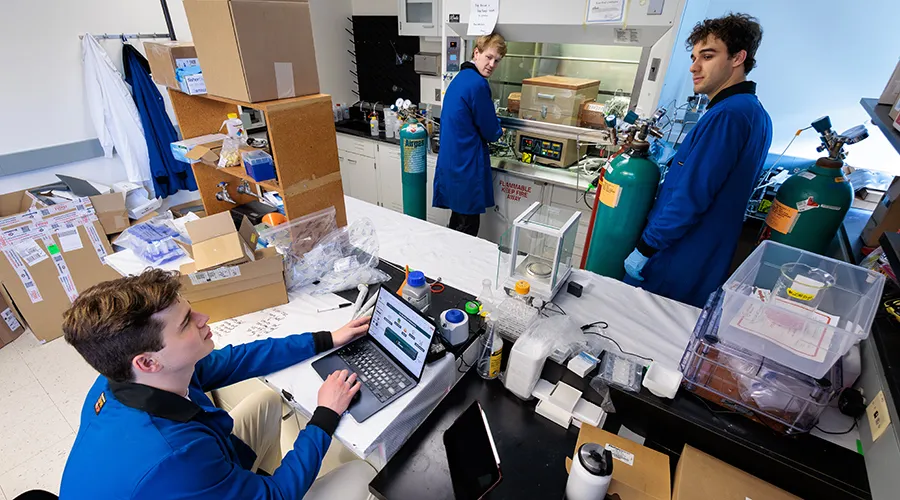
Originally focused on using plastic waste as a feed source for the chemicals, Rise Reforming last year shifted to biogas. This waste material – primarily methane and carbon dioxide from wastewater, agricultural residue, manure, and other organic matter – is already in gas form. This will allow the team to remove a step in the process, creating more immediate impact on this pollution problem.
The US produces over $5 billion worth of biogas each year, but 60% is wasted in low-margin applications or flared altogether, Rose said.
“Wastewater treatment plants are our initial focus - they have the highest share of unutilized biogas, often flaring everything they produce, and their smaller scale pairs naturally with our modular approach,” said van Oord, Rise Reforming’s COO. “Dairy farms are our second target, also offering large volumes of stranded biogas. As we reach mass production and can deploy at higher volumes, landfills become attractive due to their sheer output.”
The Rise Reforming concept was born during UChicago Spring Finals Week 2023. Rose, a Molecular Engineering major, sidled up to now-CTO Zubillaga, a double-major in Molecular Engineering and Physics, in the dining hall with an idea he had for combatting methane pollution. Zubillaga said they’d talk after finals.
Bringing van Oord on board, honing the science through the UChicago Pritzker School of Molecular Engineering’s yearly Engineering Design Capstone Course and developing the business model through the Polsky Center for Entrepreneurship and Innovation, they created Rise Reforming.
Since that conversation in the dining hall, Rise Reforming has raised more than $1.7 million in funding. They’ve secured a numerous supply agreements and LOIs with biogas producers as well as offtake agreements and LOIs for DME and methanol.
The team will soon start building a pilot project at a Chicagoland wastewater facility, Zubillaga said. That is expected to go online in 2027.
Related News
-

Polymer insights, biological impact
October 21, 2026Research sheds light on liquid-liquid phase separation, a process that helps cells form life-sustaining structures. -
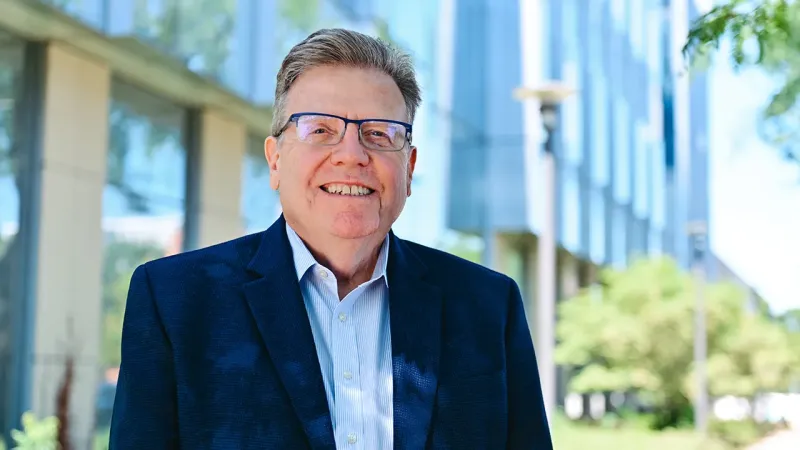
Matthew Tirrell elected to the National Academy of Medicine
October 19, 2026Tirrell has been elected to the National Academy of Medicine for pioneering the design and synthesis of self-assembling polymers to deliver peptide, protein, and nucleotide drugs in cardiovascular... -

Battery Day lights up the Museum of Science and Industry
October 15, 2026Yearly event has Amanchukwu Lab researchers help children build and understand the batteries that power their lives.