Dean’s Town Hall: Momentum and growth key to UChicago PME’s future
The UChicago PME Fall 2026 Town Hall was the first for Interim Dean Stuart Rowan
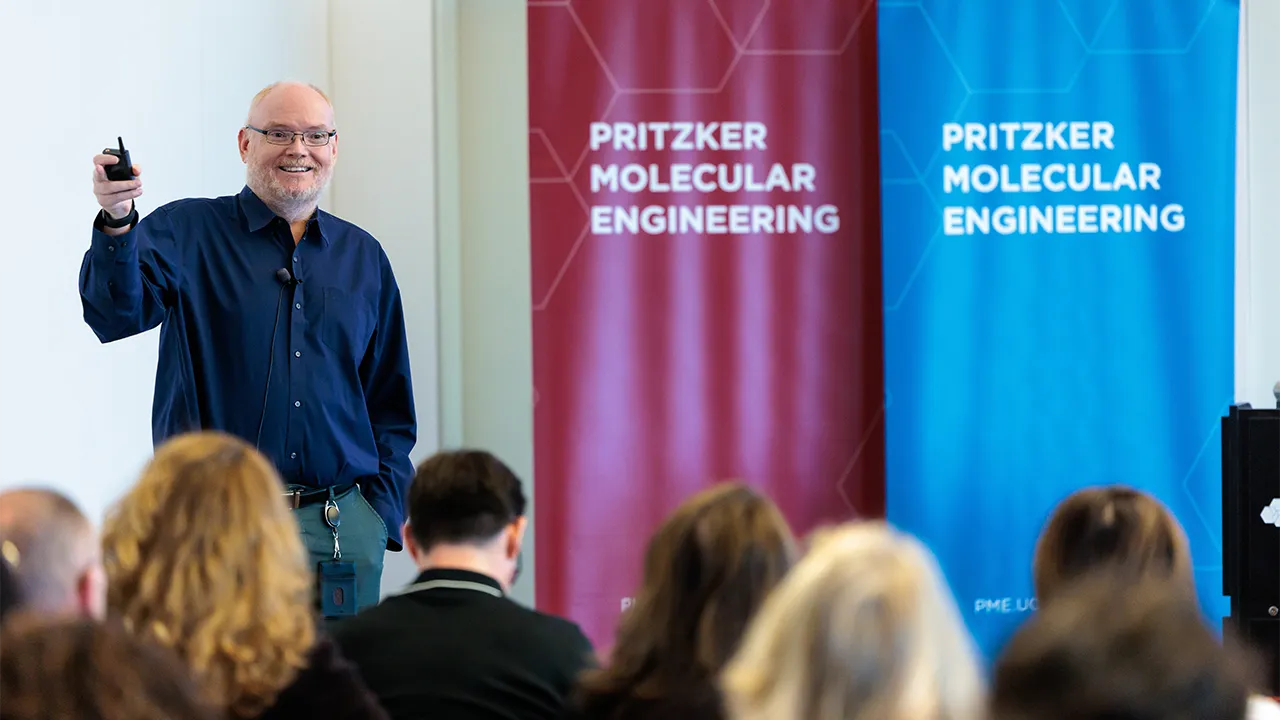
UChicago Pritzker School of Molecular Engineering Interim Dean Stuart Rowan delivered his first Town Hall to UChicago PME students, postdocs, faculty and staff. (Photo by Elaina Eichorn)
The University of Chicago Pritzker School of Molecular Engineering is only in its eighth year, but Interim Dean Stuart Rowan is looking much further down the road.
“Let’s make sure our school is around in 20, 40, 50, 60, 80 years,” Rowan said. “That’s the landscape we need to be thinking about.”
On Wednesday, Rowan presented his first Dean’s Town Hall since stepping into the interim position in July. A tradition started in 2024 by former Dean Nadya Mason, now UChicago Vice President for Research, the twice-yearly forums allow the dean to converse directly with the UChicago PME community on important news, research and institutional priorities, and pressing questions.
Around 115 students, postdocs, staff and faculty attended Wednesday’s event, either in-person or online. Two major themes of the talk were momentum and growth.
“When a new dean comes in, the first thing to do is to make sure you don’t lose any momentum,” Rowan said. “Dean Mason has done a great job of pushing UChicago PME in the right direction, building off the solid groundwork that [founding Dean Matt Tirrell] created.”
Although Rowan is new to the role of dean, he is a familiar face in the community, having joined UChicago PME in 2016. He most recently served as director for the Institute for Materials and Sustainability, ceding the role to Tirrell earlier this year.
One area where Rowan wants to maintain momentum is attracting and retaining world-class students. Just 12 years ago, what was then a small institute graduated a single PhD student. Now in its eighth year as a school, UChicago PME’s PhD programs have exceeded 300 students for the third academic year running.
The growth hasn’t been limited to PhD programs. The number of Molecular Engineering undergraduates hit 178 this academic year, growing each year since the major was created in 2015. And the Master of Engineering program saw a 33% increase in the last year alone, topping out at 48.
This commitment to interdisciplinary innovation translates to student success across the private sector, national labs and academia, Rowan said.
“When companies get our students in the labs, they understand the value of what we do,” Rowan said.
Research funding has been another area Rowan doesn’t want to lose momentum. In the past year alone, UChicago PME-led programs have garnered more than $400 million in new sponsored research, partnerships and philanthropy, including $125 million for Q-NEXT, $55 million for the Bloch Tech QuantumHub, $45 million for Great Lakes ReNEW and $20 million to create the AI-powered, remotely operated materials laboratory PoLARIS.
But more students and more research create a wonderful problem – where to put all the people who want to be part of the UChicago PME story.
“We’ll be growing in every shape or form, and one of the challenges is to make sure we’re not bursting at the seams,” Rowan said.
In addition to the Hyde Park Labs materials space that opened in the spring, Rowan highlighted the upcoming IonQ Center for Engineering and Science enabled by the $125 million IonQ Research Partnership announced last year. The new building will replace the current Accelerator Building on UChicago’s campus, housing research and teaching labs for UChicago PME’s Materials for Sustainability, Immunoengineering and Bioengineering and Quantum institutes.
In his remarks to the community that makes UChicago PME a “young but mighty” research and educational powerhouse, Rowan took a moment to reflect on the source of the innovations that define UChicago’s youngest school. One slide in his presentation didn’t show facts, figures, new buildings or innovative partnerships.
It was a simple montage of faces from UChicago PME’s student body.
“It’s people who advance all the discoveries,” Rowan said. “Thank you to all of you.”
Related News
-
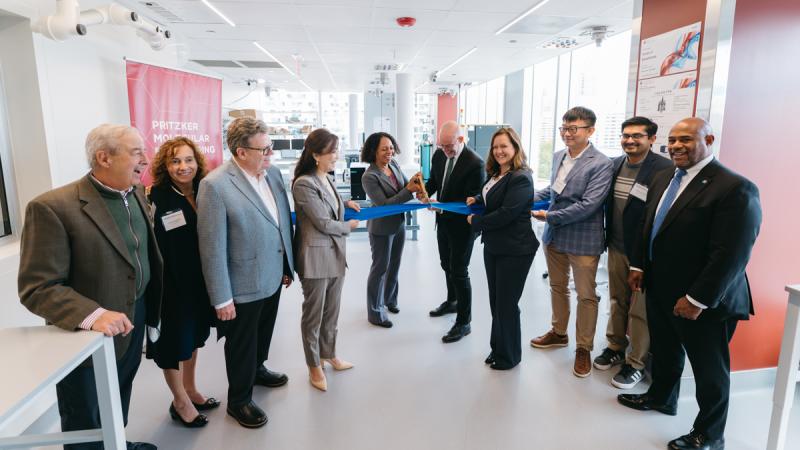
Agilent and University of Chicago Launch Center of Excellence for Energy Materials Research
October 27, 2026Agilent CoE supports research on next-generation energy storage materials. -
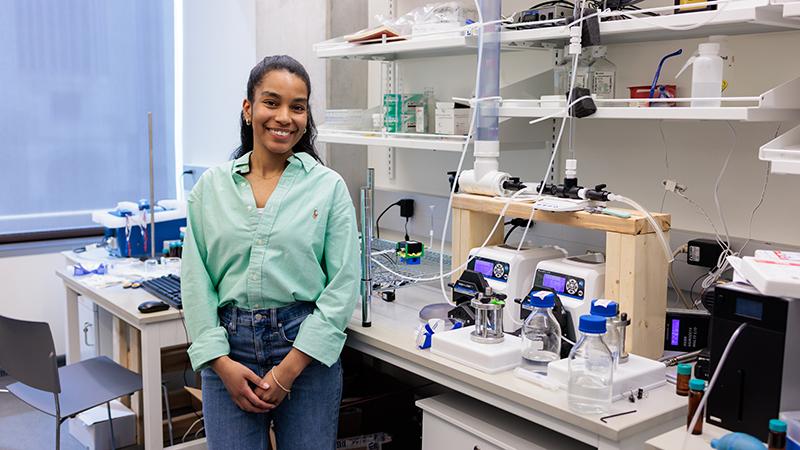
A passion for both research and teaching
October 22, 2026PhD student Jamila Eatman pursues water membrane research while educating the next generation of engineers. -

Polymer insights, biological impact
October 21, 2026Research sheds light on liquid-liquid phase separation, a process that helps cells form life-sustaining structures.