
Developing quantum sensors for better health
PhD student Antoni Wellisz is working at the forefront of quantum technology, developing biosensors that could actively monitor tiny molecules in the human body
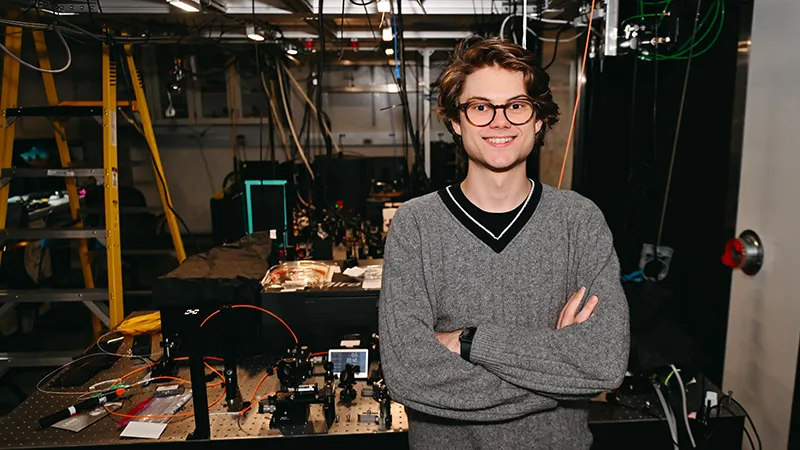
PhD student Antoni Wellisz conducts research on quantum sensors in the lab of Assoc. Prof. Alex High. (Photo by Elaina Eichorn)
For Antoni Wellisz, studying quantum engineering as an undergraduate was one of the opportunities that made the University of Chicago’s Pritzker School of Molecular Engineering (UChicago PME) stand out.
“At UChicago, you can go all in on quantum engineering as an undergrad,” he said. “It’s an exciting new frontier.”
As an undergraduate student at UChicago PME, Wellisz got a broad education in the sciences and humanities while conducting research in the lab of Prof. Supratik Guha. That sparked an ambition to forge a career at the cutting edge of quantum information science.
“To be able to work on the most interesting problems with the smartest people, I needed a graduate degree,” he said. “So I decided to do my PhD right away.”
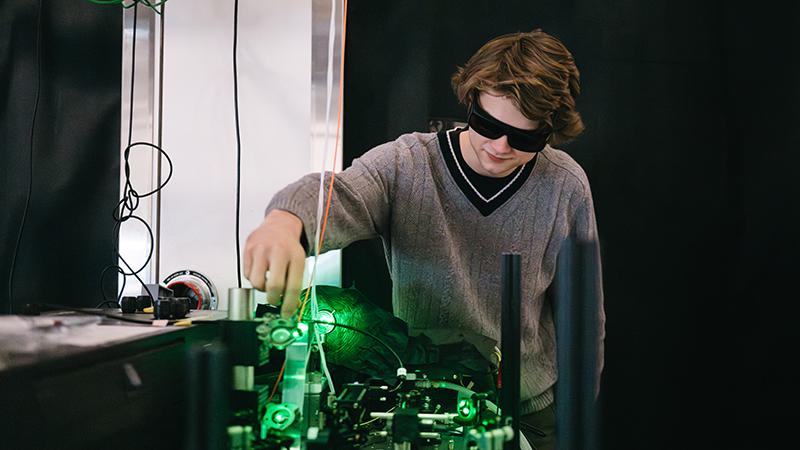
Now a graduate student, Wellisz conducts research on quantum sensors in the lab of Assoc. Prof. Alex High. The lab creates thin films of diamond that contain nitrogen-vacancy centers—defects within the material that can be used as extremely sensitive quantum sensors.
While quantum sensing has been well established for years in the form of devices like atomic clocks, researchers are now using innovative materials to develop a new generation of sensors with expanded capabilities and novel applications.
For his research, Wellisz has taken the diamond materials created in the lab and attached them to the end of an optical fiber to develop a device for biosensing within the body. Such a device could be inserted into the brain to monitor physiological signals via measuring the presence of chemicals, which could aid in assessing the neurological status of a comatose patient, for example.
“In principle, a working device could detect really low levels of biomolecules quickly in places that other sensors cannot reach,” he said. “It could potentially be a new way to do active monitoring in the human body.”
Within his lab, Wellisz has found a “wonderful lab culture” that supports him, especially when his research isn’t working out as planned. That culture is supported by High, who “trusts his students to do good work. He’s a very kind person who believes in his students,” Wellisz said.
It’s really wonderful that UChicago PME is so interdisciplinary, because you can create these wide-ranging collaborations to do some really interesting work.
PhD student Antoni Wellisz
Through his research, Wellisz has also collaborated with scientists and engineers across disciplines, including in neurosurgery. “It’s really wonderful that UChicago PME is so interdisciplinary, because you can create these wide-ranging collaborations to do some really interesting work,” he said.
Outside of the lab, Wellisz enjoys playing on the intramural frisbee team and playing board games with his friends. That re-energizes him to get back to his research. “I’m still excited to come into work every day,” he said.
After graduation, Wellisz hopes to work in a research role in industry, bringing quantum sensors to the market. “We’re now reaching a point where quantum sensors are having really amazing capabilities,” he said. “And UChicago PME is a place where you can take insights from other fields and collaborate with other departments to build quantum devices that can actually be deployed. It’s a really exciting field to be in.”
Related News
-
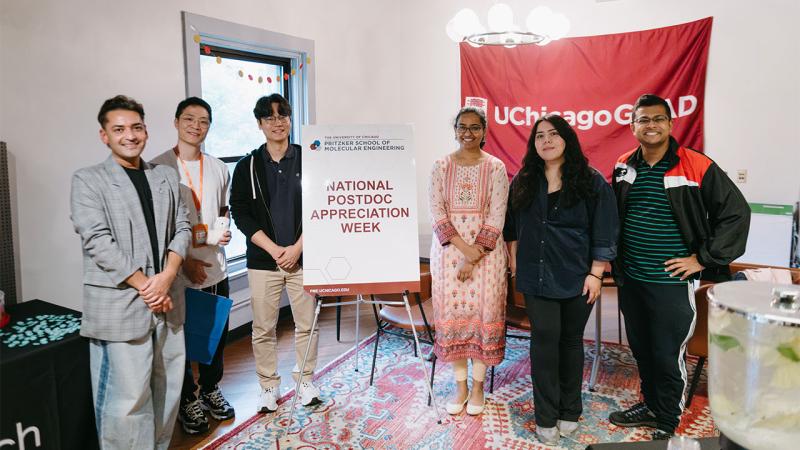
Postdocs help power discovery at UChicago PME
October 01, 20262026 National Postdoc Appreciation Week honors postdocs, marks 150th anniversary of the first postdoctoral researcher in the U.S. -
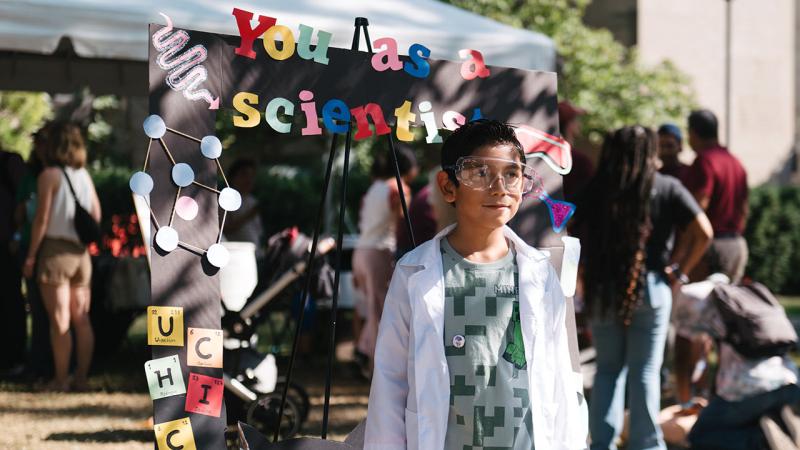
South Side Science Festival returns Oct. 3
September 16, 2026Annual community gathering invites the South Side to the UChicago campus for a day of science and fun. -
To teach quantum to teens, teachers reach for ice cream and cell phones
September 14, 2026Now in its sixth year, TeachQuantum helps teachers make quantum concepts accessible and engaging.