
Next-gen diagnostics platform based on UChicago PME research secures exclusive license
Kompass Diagnostics points the way to better fertility care with novel finger-prick hormone testing
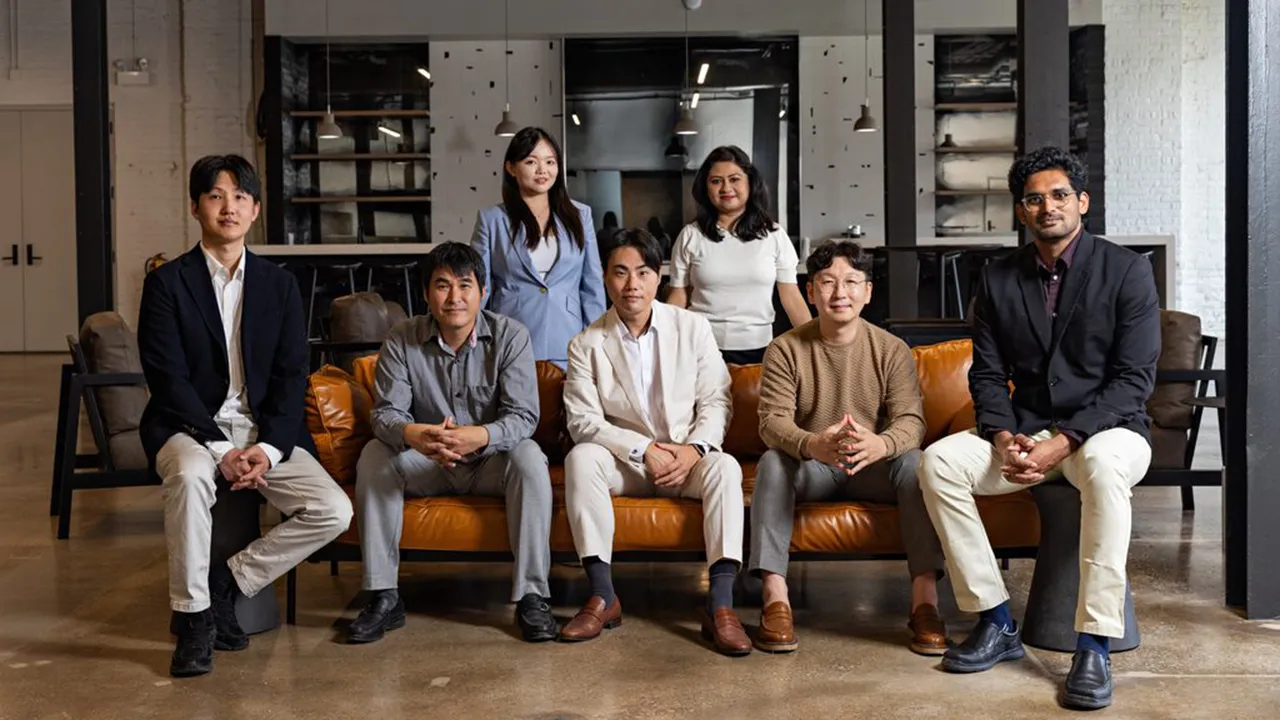
The Kompass team is made up of industry experts in diagnostics commercialization and academics from world-renowned research institutions with a collective track record of launching 6 FDA/CE-approved point-of-care tests.
Kompass Diagnostics is developing a next-generation diagnostic platform based on research at the University of Chicago and has secured an exclusive license as it looks to bring the technology to patients.
The company’s foundational technology was co-developed by researchers at the University of California, Los Angeles (UCLA) and the University of Chicago Pritzker School of Molecular Engineering (UChicago PME), where investigators were exploring new approaches to translating biological signals into semiconductor-compatible electrical outputs.
The work resulted in a portable, cost-effective, rapid point-of-care diagnostic device that uses high-sensitivity biosensors for detecting multiple blood-based biomarkers. And it has demonstrated higher sensitivity in chemistry, immunoassay, and molecular diagnostics compared to conventional tests that rely on large, expensive laboratory instruments.
Now, under the newly established exclusive licensing agreement, Kompass Diagnostics will lead further commercialization efforts and continue developing the platform for clinical applications.
“We are excited to see this technology advance from the research environment toward real-world impact and believe Kompass Diagnostics is well-positioned to realize its commercial and clinical potential,” said Heather Walsh, assistant vice president for technology ventures, Polsky Center for Entrepreneurship and Innovation at the University of Chicago.
The Electrical Transduction Assay (ETA) platform is a novel biological-to-electrical signal transduction framework that converts biochemical events directly into digital information. It more closely resembles the electronic architecture that powers consumer devices, reducing complexity, lowering costs, and enabling highly sensitive testing across a range of environments, such as physicians’ offices, pharmacies, and patients’ homes.
Kompass Diagnostics’ first application of the ETA platform is a rapid finger-prick multi-hormone testing system for fertility treatment, including in vitro fertilization (IVF) and egg freezing.
Demand for fertility treatments has grown significantly, yet clinics remain limited and concentrated in metropolitan areas. A major barrier to expanding clinic capacity is the cost of building laboratory infrastructure capable of providing same-day hormone testing, which guides time-sensitive treatment decisions. Kompass aims to reduce this barrier with a cost-effective platform that enables testing in satellite monitoring centers and Ob/Gyn practices.
“We believe diagnostics is approaching a pivotal inflection point similar to the transition from film cameras to digital imaging. Our goal is not simply to miniaturize laboratory instruments, but to create a new architecture that makes biological information digitally accessible wherever healthcare decisions are made,” said Mingoo Kim, cofounder and CEO of Kompass Diagnostics.
Recently, Kompass was selected as a finalist for the 2026 Association for Diagnostics and Laboratory Medicine Disruptive Technology Award, which recognizes technologies with the potential to transform patient care and address critical unmet needs in diagnostics. Being selected as a finalist is a strong validation of the company’s scientific and technological foundation, noted Kim.
Building on this foundation, the company has, to date, raised $2.7 million in financing.
In the near term, the company looks to close another funding round to further develop its platform. Long term, the vision extends beyond diagnostics.
Said Kim, “By making biology easier to measure and digitize, Kompass aims to help build the data foundation for a more proactive, personalized, and continuously informed healthcare system.”
Navigating the path to commercialization
Hyun-June Jang was working in the lab of UChicago PME Crown Family Professor of Molecular Engineering Junhong Chen as a postdoctoral researcher when he reconnected with Kim, who was pursuing his MBA – and looking to start a company.
The two, who knew each other from their time at Johns Hopkins, cofounded Kompass Diagnostics with Hyouarm Joung, a co-inventor of the technology from Professor Aydogan Ozcan’s lab at UCLA, in 2022.
Soon after, Kim and Joung made the move to Chicago to pursue the startup full time and be close to the area’s universities and talent pipeline.
“The University of Chicago has been super supportive of us throughout the process,” said Jang, who explained that his postdoctoral experience provided the right research environment to create the technology that eventually became Kompass.
Working with Professor Junhong Chen, he was encouraged to pursue independent research while also collaborating across disciplines. “That combination of intellectual freedom and an open, collaborative culture was essential in developing the core technology,” he said.
Jang also cited UChicago’s “outstanding ecosystem for thinking about commercialization,” which includes Chicago Booth and the Polsky Center for Entrepreneurship and Innovation.
Shortly after founding the company, Jang participated in two programs at the Polsky Center, including I-Corps. Through these experiences, he learned how to evaluate technology from a business perspective, identify customer needs, and “think about building a company rather than just publishing research.”
“The Polsky Center played a major role. They were incredibly startup-friendly and provided practical support throughout the commercialization process,” said Jang, who had opportunities to move the technology elsewhere, but chose to build in Chicago. “I found that the Polsky Center was much more supportive and engaged in helping researchers turn their innovations into startups. That made a significant difference in our decision to build the company at the University of Chicago,” he said.
Of note, Jang cited how personal the programs were. “It wasn’t just about attending lectures. We had direct opportunities to communicate with instructors and mentors, ask questions, and receive immediate feedback,” said Jang.
Another valuable aspect was access to the Chicago Booth community.
“Through these programs, I also had the opportunity to participate in other Booth entrepreneurship activities, which exposed me to different ways of thinking about innovation, markets, and company building,” said Jang. “Working closely with MBA students and other colleagues gave me perspectives that I wouldn’t have gained in a traditional research environment. They helped us conduct customer interviews, challenged our assumptions, and provided practical feedback as we refined our business model.”
It was this combination of formal programming and interaction with the Booth community that made the experience “much more personal and impactful,” he said – while also significantly accelerating the commercialization journey.
Related News
-
High school interns enjoy a summer of science
August 10, 2026High school student Tarik Gencer didn’t think much about electrochemistry before summer break. Gencer, who will be starting as a senior at Horizon Science Academy McKinley Park High School in... -
Engineering the Summer: Building interdisciplinary expertise
August 05, 2026Engineering the Summer is an annual series following UChicago Pritzker School of Molecular Engineering students as they embark on summer internships and career experiences. While many researchers talk... -
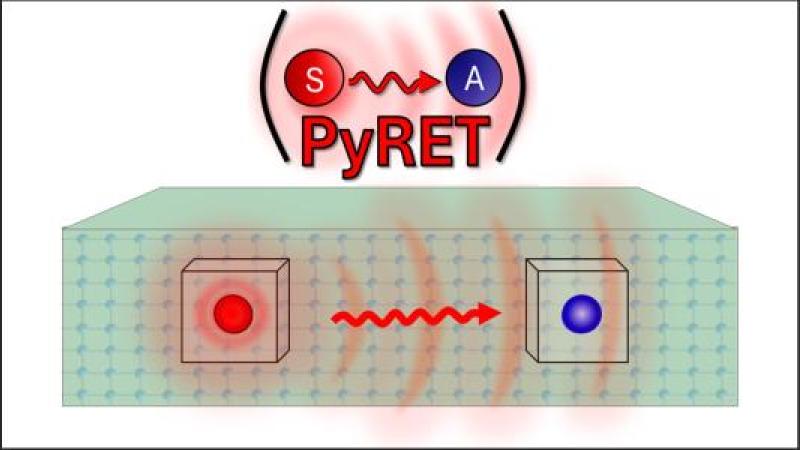
New open-source software predicts energy transfer between tiny defects in solid materials
July 30, 2026The performance of many next-generation devices depends on controlling how energy flows at extremely small scales. In the field of microelectronics — where devices continue to shrink and new materials...