
NSF CAREER award to study the ‘blueprints’ of living tissue
CAREER project will investigate how cell lineage and neighboring signals shape tissue in three dimensions
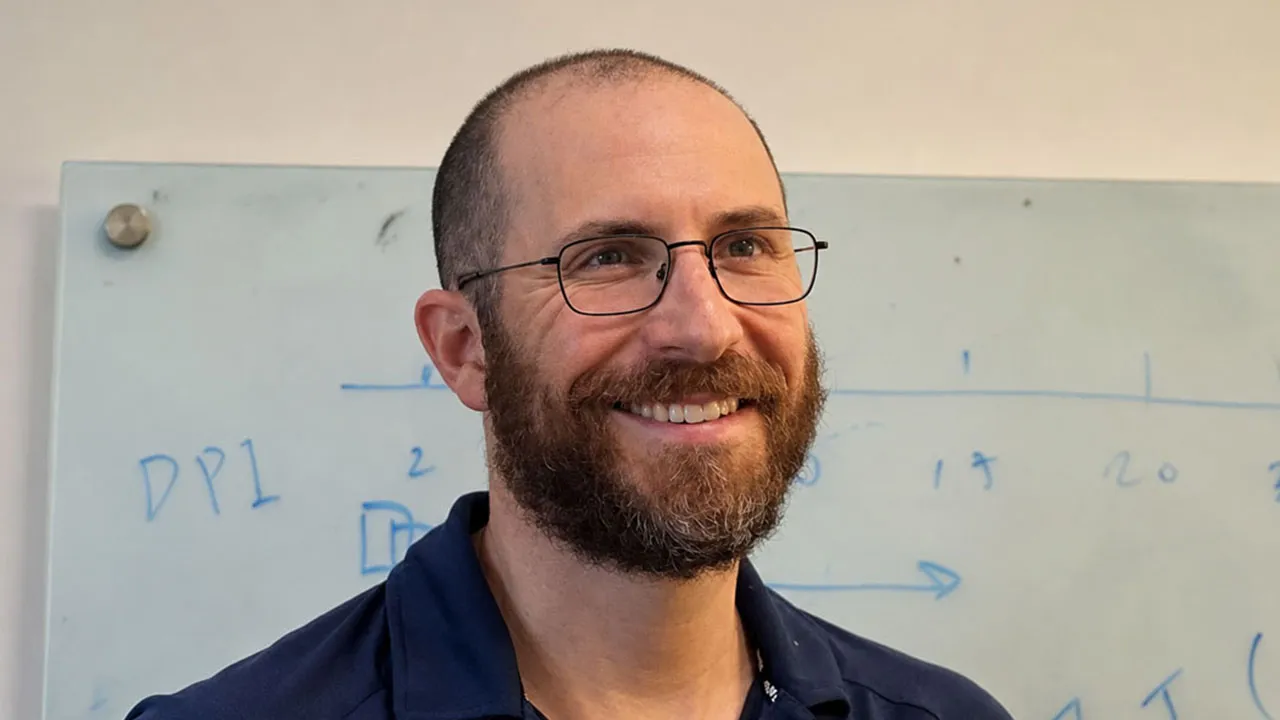
Asst. Prof. Joshua Weinstein, who holds appointments in the UChicago Pritzker School of Molecular Engineering and the Department of Medicine’s Section of Genetic Medicine has received an award from the U.S. National Science Foundation’s Faculty Early Career Development Program (CAREER) to support his efforts to investigate how tissues organize in three dimensions.
The growth, repair and even the breakdown of living tissues are the result of the coordinated efforts of millions of individual cells.
Sometimes a cell’s lineage history and inherited cell programs help determine its role in these processes. Other times signals from neighboring cells dominate instead. Understanding how these influences work together would advance basic biology, with implications for cancer biology and regenerative medicine.
“The same organization that guides healthy development breaks down in cancer. On the other hand, a key goal of regenerative medicine is to reconstitute that organization,” said Asst. Prof. Joshua Weinstein, who holds appointments in the UChicago Pritzker School of Molecular Engineering and the Department of Medicine’s Section of Genetic Medicine.
A new award from the U.S. National Science Foundation’s Faculty Early Career Development Program (CAREER) will support Weinstein’s effort to investigate how tissues organize in three dimensions. Instead of using a microscope, volumetric DNA microscopy programs DNA inside intact tissue to encode how the tissue’s molecules are arranged in space, so that an ordinary DNA sequencing machine can reconstruct that organization in three dimensions.
The project will track the family history of cells in laboratory-grown model tissues, including neural-tube organoids grown from a single cell, while switching individual genes on and off with CRISPR gene editing. It will then use volumetric DNA microscopy to map lineage, gene activity and three-dimensional position onto the same cells in intact specimens, and compare models that test how much cell lineage and neighboring signals each contribute to tissue form.
“The project's central objective is to determine when a cell's lineage – its place in the tissue's family tree of cell divisions – acts as a predictive blueprint for the tissue's three-dimensional shape, and when signals from neighboring cells dominate instead,” Weinstein said.
The project aims to create a cohesive framework for measuring and predicting tissue formation by connecting information that current microscopy and sequencing approaches rarely capture together.
“Today’s tools force a hard choice,” Weinstein said. “They can survey which genes are active across many cells or preserve a tissue's intact three-dimensional structure, but they rarely capture a cell's ancestry, its molecular state, and its physical neighborhood together in a single whole specimen.”
The outcome will be a measurement-and-modeling framework that separates inherited cell programs from local neighborhood effects as tissue takes shape. Its analysis methods are designed to generalize to other complex, network-structured biological data, advancing NSF priorities in Biotechnology and Artificial Intelligence.
Related News
-

Welcome to the Neighborhood: UChicago Pritzker Molecular Engineering in focus as ACS Fall 2026 brings the world to Chicago
August 11, 2026As the global research community gathers in Chicago for the American Chemical Society’s yearly conference, UChicago PME faculty and leadership share insights and innovations. -
High school interns enjoy a summer of science
August 10, 2026High school student Tarik Gencer didn’t think much about electrochemistry before summer break. Gencer, who will be starting as a senior at Horizon Science Academy McKinley Park High School in... -
Finding a hidden culprit in quantum biosensors
August 03, 2026Research indicates surface effects, not temperature, are responsible for a longtime hurdle in using quantum tech to explore living cells.