‘A place where anything is possible’
PhD student Edward Ionescu prepared for a career in therapeutics by studying the effects of the gut microbiome
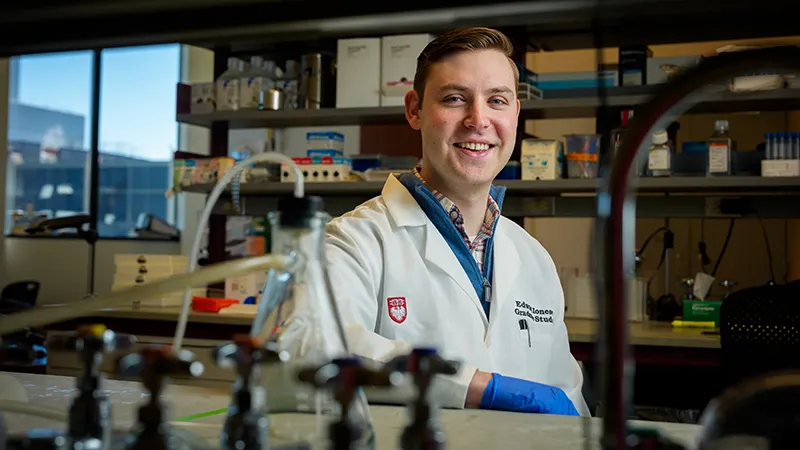
In the lab of Prof. Cathryn Nagler at the University of Chicago Pritzker School of Molecular Engineering, PhD student Edward Ionescu studied the gut microbiome’s role in protecting humans from non-communicable diseases such as allergies and inflammatory bowel disease (IBD). (Photo by Jason Smith)
Edward Ionescu never wanted a career as a physician, but he did want to help people live healthier lives.
“I figured the next best thing would be to work on developing therapeutics,” he said.
As a chemical engineering major at the University of Michigan, he found a home in a protein engineering lab, where he conducted research on recombinant antibodies for Alzheimer’s treatments.
“The bench work was fascinating, but I missed the application part of it—the testing, seeing if it actually helped disease,” he said. “So when I looked for PhD programs, I wanted to find a place where I could work on cutting-edge medicine and actually test therapies to see if they worked.”
He found that at the University of Chicago Pritzker School of Molecular Engineering (UChicago PME), where he became a PhD student in the lab of Prof. Cathryn Nagler.
“When I came to visit, it seemed like everyone was collaborating and everyone was doing amazing things with disease modeling and therapeutic strategies,” he said. “UChicago PME seems like a place where anything is possible.”
When I looked for PhD programs, I wanted to find a place where I could work on cutting-edge medicine and actually test therapies to see if they worked.
Edward Ionescu, PhD'26
In the lab, Ionescu has studied the gut microbiome’s role in protecting humans from non-communicable diseases such as allergies and inflammatory bowel disease (IBD). Though there are trillions of bacteria and fungi in our guts, Ionescu focused on studying one class of metabolites, called secondary bile acids, that are made by gut bacteria.
He and his collaborators studied the effects of these metabolites in the context of IBD and found that this single metabolite can play a role in protecting the gut from the disease.
“When bacteria like these are missing due to a Western diet or industrialized society, people may lose those protective effects,” he said.
In addition to his main research, Ionescu has had the chance to collaborate on projects related to cancer and biosensors. “It’s just been really cool to work with experts in other fields and learn directly from them,” he said. “I’ve seen how broadly relevant my research has been to many other fields.”
When he’s not in the lab, Ionescu enjoys visiting restaurants around Chicago or making his own “overly elaborate meal” at home. And because he studies the gut microbiome, he knows that fiber-rich and fermented foods are some of the best ways to boost the good bacteria in your gut. “I’ve always loved fermented foods, so that’s not a problem for me,” he said.
After graduating in June 2026, Ionescu joined Eli Lilly as a postdoctoral scholar, studying anti-inflammatory cells in contexts beyond the gut. “It’s really up to me to explore and come up with a project that fits both my interests and the company’s broader goals,” he said. “I want to help people, and building my skills as an independent researcher working directly with therapeutics in industry is a great way to do that.”
Related News
-
Where the micro-scale meets the macro-scale at UChicago
October 15, 2026Master’s student Mel Zhou uses microfluidic platforms to learn how individual patients might respond to different therapies -

Learning is a blast – and a bang – at the South Side Science Festival
October 08, 2026Dancing robots, mutant Legos and rocks that rock mark the fifth annual UChicago STEM community outreach event. -
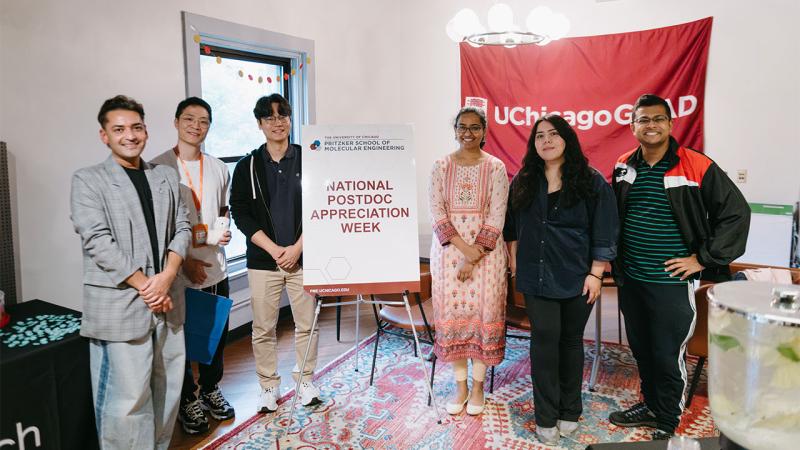
Postdocs help power discovery at UChicago PME
October 01, 20262026 National Postdoc Appreciation Week honors postdocs, marks 150th anniversary of the first postdoctoral researcher in the U.S.