
Nuclear memories in solid-state systems are necessary for scalable quantum networks based on these platforms. They are robust systems that exhibit long coherence times that make them attractive for many applications in quantum sensing, networks, and computation. Nuclear spins coupled, either strongly or weakly, to a central electron spin act as a local nuclear register in a quantum network node. Control of single nuclear spins in silicon carbide has been an outstanding challenge until this result.
The most abundant nuclear spin in natural silicon carbide is 29Si (4.7%), which is a spin-½ nuclei. We control one of these strongly coupled nuclei, ones that fall within the T2* of the electron spin, from directly resolvable transitions using external radio frequency fields. We polarize the nuclear register through algorithmic cooling in which we swap the known state of the electron spin with the nuclear spin state. We achieve 93% initialization fidelity and drive Rabi oscillations with these strongly coupled spins. From our results, we demonstrate that isolated, strongly coupled nuclear spins are useful as quantum registers with fast gate time that can be used in long-distance communications schemes.
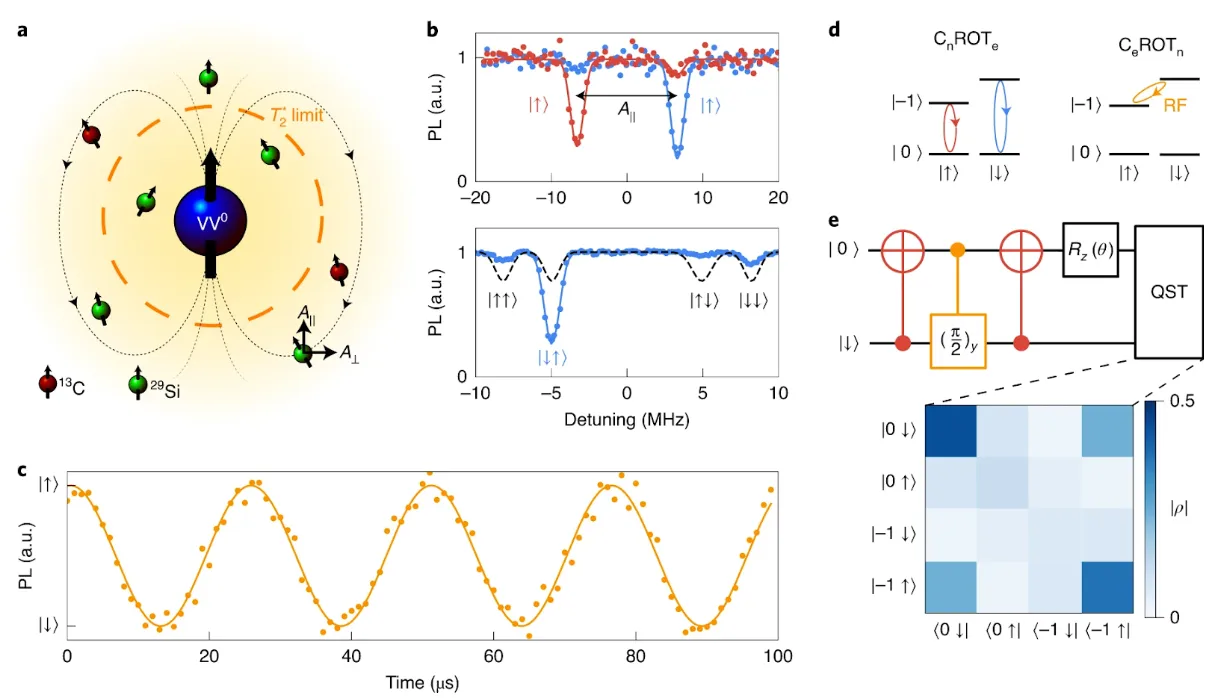
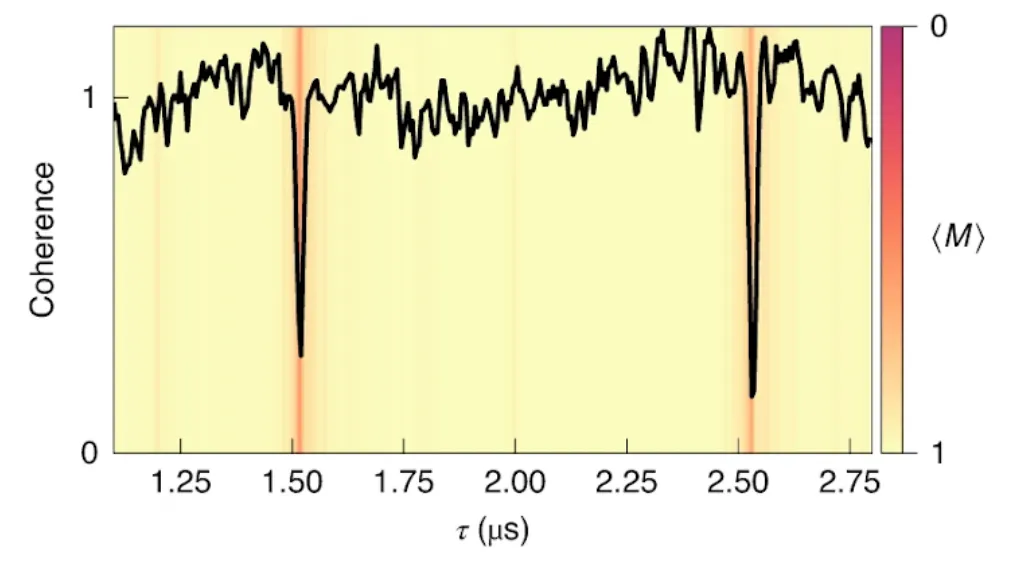
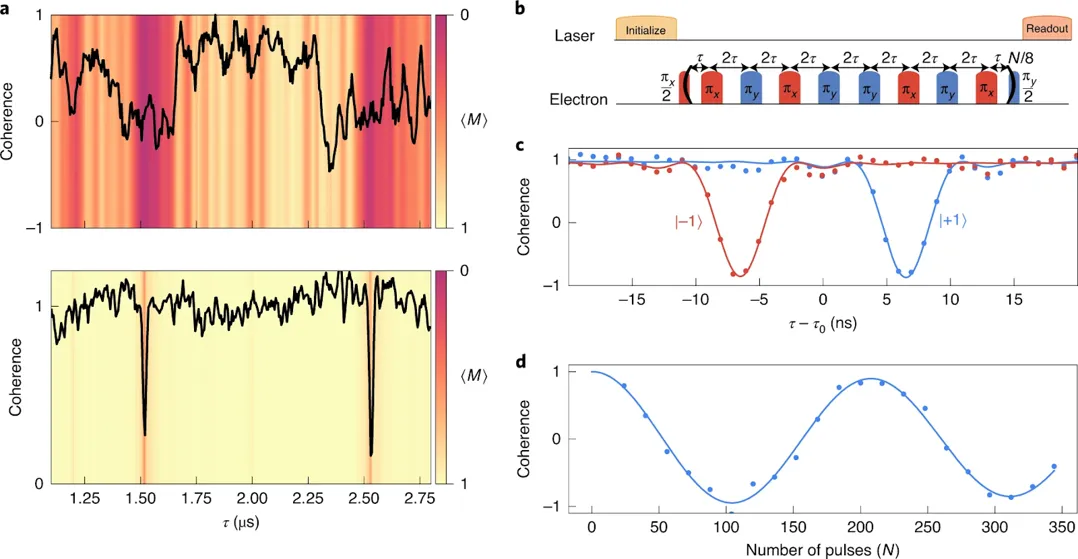
In our work, we also probe weakly coupled nuclear spins, beyond the electron T2* limit, from an isotopically engineered material. We use an XY8-based dynamical decoupling sequence to perform nanoscale NMR with a kk divacancy and identify an isolated single nuclear spin with low hyperfine coupling. We then perform nuclear rabi based on the wait time that is resonant with the nuclear spin from XY8 by varying the number of pulses N.
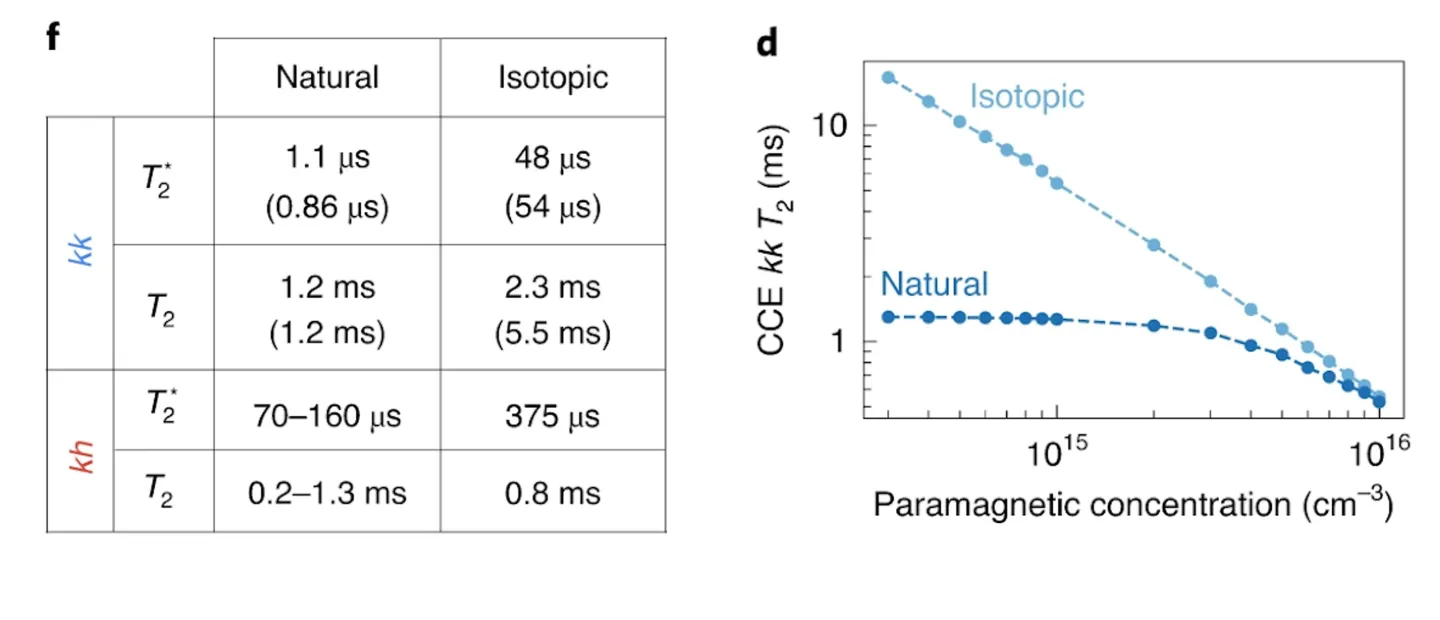
We then look at the coherence times of the different divacancy species (basal and axial) and find that the Hahn echo decay time improves by 2 fold from natural SiC and a Ramsey decay improvement of close to 50 fold. We attribute the differences in coherence times from our simulated values due to paramagnetic impurities that are dark in the material but comparable in magnitude to our electron spin.
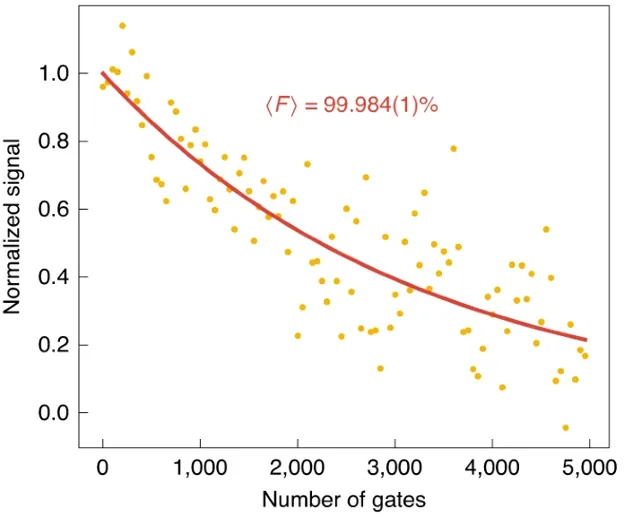
Lastly, we benchmark the isotopically engineered material through randomized benchmarking. We note high fidelity control of 99.984% and 99% initialization and readout fidelities of the divacancy in SiC.
Details can be found in our manuscript:
A. Bourassa, C. P. Anderson, et. al. Nature Materials (2020)